The Electrics: Diary of a Scottish Madman

October 2002

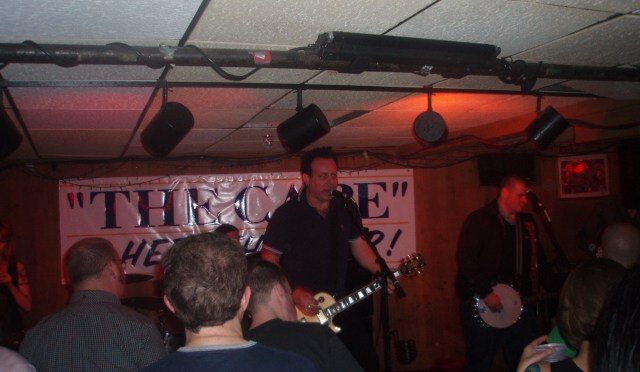
Just in case you out there in reader land thought life in a rock’n’reel band was a glamorous jet set life of groupies, drugs and fast cars, think again. The Electrics’ Jimmy D. the tells us about the bands recent US tour that managed to include playing at a society wedding and a born again Christian rock festival (with a gig in Paddy Reillys to complete the tour)

The U.S.A trip had its ups and downs, but I’m glad we did it. We flew to Heathrow, where we should have met up with Tim, the fiddler. His bus was delayed by 2 hrs to the airport though, and they wouldn’t let him get on the plane, although they had JUST closed it a minute before. Thanks Virgin Atlantic!
So we had to go without him, he got to NYC next day. A good start ,,,,,,,,,,,,,,,,,,,,,

As soon as we landed, (Thurs night-11pm) they had lost my bags. JUST mine,,,,,,,,,,,,,,,,, Guitar leads / fx /clothes /toiletries etc. Everything. It didn’t arrive for three days by which time I had to buy new clothes and stuff. The airport had said that I was entitled to $60 per day that it was missing,, but have since told me that its ONE payment, not per day, which cant be right. We called and called, but no answer. We didn’t get a chance to chase it up until we were leaving again, by which time I was given the brush off’/run around by the Virgin staff. It’s a disgrace. After a couple of hours spent going from one side of the airport to the other, they told me that even if I was entitled to more money, ,that it was too short notice to get it that day and that I would have to sort it out with Virgin UK! Dirty bastards eh? So we got to our hotel the first night, which was booked by the groom (WEEKS before) to be told that they don’t have the rooms we booked with one double and one single bed, but they can give us an extra bed, for MORE money.

We had no choice. We had the next day off to explore NYC, so Sammy his wife and me were out on the streets of Manhattan at 8am. Magic! Its some place, and it is like walking around a film set at times. We also went to the Ground Zero site too, which was very eerie. Saturday was the big event,,,!

The wedding in Manhattan was incredible. I’m guessing that the families have a FEW dollars. It was outside in a park/square type thing, with the big restaurant right beside it. It was the full thing with the shirt n tie waiters carrying the trays around, free cocktails etc. THEN the sit down meal and reception downstairs, with the posey food that nobody actually likes, but costs a packet. Sunday should have been a giggin day, but turned out not to be. So we traveled up to Harrisburg P.A. Home of the HUGE Hershey Chocolate Company.

We won’t be doing things the same way next time mind. We will set stuff up ourselves,and just go and do it. No messing about waiting for gigs to be confirmed, then cancelled at a days notice etc. Two were lost, one was a festival that couldn’t get insurance for the outdoor event, dunno about the other. Which meant we had two more nights in hotels to pay for, with no money comin in. The guy in Pennsylvania was fantastic though,,,,
He told us to come up there the day before, and HE paid for an extra night in a hotel for us. What a guy. Then took us to his house to spend the day in his pool, and have some food. Magic. Wish I could swim though,,,,,!
We went and did a wee spot on a local radio station, WJTL–P.A and the poor guy didn’t know what had hit him. Good fun though.

The gig that night SHOULD have been a total disaster. The p.a. was broke all night, Sammy’s fx broke, then mine, then the fiddlers! I was playin through a 60 watt Keyboard amp, with no overdrive obviously. Then that broke. Then worked again, then one channel died, then the other! I ended up havin a guy hold the lead in while I played. Mad! It still went down a storm though, thankfully. We took about 30 t-shirts with us, and sold them all at the first gig! DOH! Could have sold LOADS more too.

Tuesday meant goin BACK to NYC to gig in a tiny Irish bar. That was great fun. Though it was empty. Maybe 30 or 40, though it only holds 74 full! First band on were called Warsaw and The Poland Brothers. Punk/Ska/Funk/Celtic stuff. Mental. They have done 300 gigs a year, for the past 8 years. The gig was broadcast live by webcast, through the Celtictv.com site too!
We made $80 on the door. The plan was to drive for an hour or 2 out of town, et a cheap hotel and crash out. Didn’t happen. EVERY one we stopped at, VERY one, put up the price when we asked them. Some of them were really cheeky too. So we kept drivin, and drivin,,,,,,,By the time it was 5.30 am, we were still lookin to get a place, sleep till 3 or so, then head on. But no. Couldnae get ANYWHERE.
It got more expensive he further we went. We ended up goin in for breakfast, and headin right on up to near Boston to stay with a friend of Sammy’s. What a long day that turned into. Davie was not surprisingly knackered, with playin, then drivin all night. The 96 degree heat wasnt helpin eiher.

Got to the guys house, they ALL slept. I couldn’t. Stayed up, went into Boston, bought CD’s, had dinner. I was now TOO tired to sleep. We had no gigs for 2 days now, cos of mess ups. We all bought bike jackets in a big mad cheap place. Except the fiddler, cos he is English, and therefore a fudd! Lightweight leather, excellent. About £22 I think. Bargain. It will go nicely with the 2 I have already. DOH! Boston is a very cool city, with some crackin CD shops. I saw the famous Cheers bar, and Harvard Uni etc, but I was too brainy to be allowed in!

We headed off next day to do the big festival, at LOON MOUNTAIN! Aye, I pissed myself when I saw the name. Took us ALL day to get there, and we arrived 45 mins before we were due on. We booked into a big log cabin, with a pool etc, which was magic. It would have cost about the same for 3 rooms, for us, and Sams friends. The Friday gig went down a storm, but only about 100 folk there, in this cafe place. The Saturday gig was fantastic, in a big tent to about 3/400. Sammy appeared side-stage before it, furious. He didn’t want to do the gig, because he had just been told that the festival takes 25% of the merch sales, AFTER you pay them$125 to sell stuff in the first place. They basically screwed us, and everyone there.
Food prices were terrible, $5 for a grilled chicken sandwich, $2.50 for a bottle of water? Shocking, especially for a supposed Christian event. Disgraceful,,,,,,,,,,,,,,,

He eventually decided to do it, cos the place was full by now. But he told everyone there not to buy ANY stuff from the festival, but to get our CD’s online. We still sold about 25 or so, but had to give the man $98 from that. I took Scotland wristbands to sell, and a few blue shirts with the lion on them, but we threw them to the crowd, rather than give them any more money. It was a disgrace. The gig was brilliant though, cos we were so pissed off. At the end, I leaned over to lift Sams bass out of the way, and tweaked my back. AGONY! The worst I’ve done it for years. Could hardly move. And JUST as I did it a woman comes over and asks me to get a picture with a crowd of them. I’m standing, in agony with a bunch of wee lassies around me, tryin to smile. She THEN pulls out one real camera, and SIX wee disposables. AAARGGHH!! I’m standin like a cripple, and the flashes are doin my eyes in.

We packed away and headed to the lodge,,10 mins away. I could feel somethin else not right on the way. I got a full on migraine too, brought on by the 7 flashes in a row I think. What a horrible night that was for me.
I couldn’t even see to find my medication or anythin. I spent the night lyin on the floor, with a migraine ice patch on my head, an eye mask to block the light, and the clothes I wore at the gig. I wasn’t even able to get washed.

I woke at 7, with my back REALLY hurt, and the dull leftover head pain. Had an hour in the bath which helped a wee bit, but I didn’t think I would make the 1pm show at the festival. Turns out I did, and it was maybe the best show of all. Best sound, etc. And that was that,,,,,,,

It was a LONG trip back with my sore back though. Although I did get a better seat than the rest of them, cos the old woman at the check-in liked me, ,cos she had been to Glasgow once and liked the people. Hehehehe, more legroom for Jimmy D!!! I got told off on the plane for using the “1st Class” toilet. There was ONE guy in 1st class! I replied by telling the snobby stewardess that the others were occupied, and that I HAD to go. And asked her if she would rather have me shit myself on the plane. She didn’t reply! Hehehehe! Funny that.

And just to cap it all off nicely, we got back to find that ALL our bags were missing. Got them next day. Bastards,,,,,,,,Still, mustn’t grumble eh? Er,, is that enough info?

The Dubliners To the Dropkicks – Luke Kelly, Shane MacGowan and Ken Casey: The Rebel Irish Tradition

September 2001

“Wife, I thought to myself, children forgive me for what I do this night, terrible as it may be, for this is Ireland in the rain of an ungodly time.…Where the dead must go to die” -Ray Bradbury

From Ireland they come. A land of terrible beauty, to use a well-worn cliché. A place forever at war with it’s past, yet eternally connected to it. Forever in love yet combat until the end of time. Yes, to be sure, the story starts with the land itself. A land symbolized by Green. Green everywhere, as far as the eye can see. Even green shadows. This Green land – a symbol of life? What of the contradiction? Green with life, but a history full of death. A land of hope, but a people forced out into exile. Where life itself flourishes. Where the dead go to die. A history filled with heart-swelling victory and even more so with deep seeded loss and regret. A story within a story within a tragedy. And a people more resilient than a people ever were. And out of this land, rebels were born.
Within this piece, I want to give a brief history of early rebel musicians like Luke Kelly and the Dubliners, and explore how being Irish has shaped them and the men that have followed in their whiskey-stained boot steps. Devices such as themes of rebellion, freedom, war, drinking, sex and more drinking are prevalent in all of their works. Being an Irishman and growing up in certain circles shapes the way one views life, ones attitudes and beliefs. It is no secret, then, that the rebel Irish musicians who inhabit this piece, whether born to Ireland herself or born of the great Irish Diaspora which history tells us of, have shared experiences that contribute to the uplifting, sad and angry music they make and the uncompromising way they live their lives.

“I started singing folk songs after realizing that they were not as square as I had been led to believe.” -Luke Kelly

Born in Dublin in the year of Our Lord 1940 was Luke Kelly. Luke grew up in the rough, tough-n-tumble dockside area of Dublin. A strong working-class upbringing had a huge effect on this future leader of the legendary folk ensemble, The Dubliners. Luke, at first, rejected the idea of doing folk music. He opposed the idea, thinking, as many do, that folk was simply fluff. Upon closer inspection, however Luke realized the themes contained within the songs were hardly light-hearted material. Luke immediately related to the themes of the Irish folk song, themes any working-class member of Irish society could: drinking, fighting, loving, living and dying. Matt Kelly of the Dropkick Murphys once noted that “folk songs are more punk than most punk bands songs anyway.” And right he was. Luke Kelly and the rough and tumble cast of characters who make up the Dubliners did folk how it should be: from the gut, no bullshit. The response they got was immediate. Their version of “Seven Drunken Nights” made them the toast of the folk scene and concerts everywhere sold out. They were a smash! Hit albums and tours continue to this day. Their status as legends is secured. Not what you expected from a bunch of hairy people who “looked like they’d just been dragged out of a seedy bar via a hedge (backwards) and dropped on London from a very great height” to quote an accurate description I once read.

Terje Oye’s excellent website describes the Luke and the Dubliners influence as follows: “The number of artists that list The Dubliners as one of their major influences and idols, is endless. They have brought folk music to millions of people all over the world, people who never would have been interested at all. That isn’t only because of the folk music, the instrumentals alone, it’s because of The Dubliners, their astonishing voices, their indescribable instrumentals, the wild life style and drinking, late sessions, their enormous beards, their extensive touring, their charisma and characters. It was, and still is to a certain extent, a blend the world will never see again.” Sadly, Luke Kelly passed due to cancer in 1984. The world lost a great man, but the influence left behind remains even to this day. Luke and the lads certainly did bring folk into the spotlight, and proved what attitude, heart and belief could do for a group, and their influence on those who came after looms large over the Irish music scene to this very day. If there is one group that Luke Kelly and the Dubliners could claim are closest to their own hearts, one most true to their own visions and one whose influence among generations of future musicians is nearly as great as their own, it would have to be the almighty Pogues, led by Shane MacGowan.

“We were heavily influenced by The Dubliners who I thought were the band that demonstrated Irish pop music the best.” -Shane MacGowan “A Drink With Shane”

Shane MacGowan was born in Kent, England, on Christmas Day, 1957. Although he grew up with firm Irish roots, his tale differs from Kelly’s in some ways, but the parallels do run deep. MacGowan’s father, Maurice, had grown up in Dublin, and his mother, Therese, had grown up on a farm in Tipperary. Shane actually lived in Tipp during his early years, and spent the summers of his youth there. He was surrounded by traditional Irish music and had many relatives who played instruments such as the banjo, fiddle, accordion, tin whistle, etc. All of this would stay in his memory for his lifetime and would contribute to the masterpieces he later produced with the Pogues. During his early school career, Shane had an acknowledged gift for writing and most other subjects. Shane spent his hours reading old Irish poetry and in time learned to write his own rhymes. He seemed headed for an impressive scholarly career, but it wasn’t to be for Shane, though. He got kicked out of a prestigious private school for illegal drug possession and was bound for greater things.

Before embracing the folk of his childhood, however, MacGowan would come up in the blossoming punk scene of London in the late ‘70’s. Shane became a face on the scene early on after the infamous ‘ear-biting’ incident at a Clash show would land the bloodied Irish teen on the cover of London’s largest newspaper. The energy, violence and power of the punk scene would also leave a lasting impression on the young Shane and he began to harness the creative energy he possessed, with his life-experiences of being a young London Irishman. After a few semi-successful tries and one damn fine group, the Nips, Shane decided to put his two natural musical loves together, Irish folk played with the breakneck energy and bombast of punk rock.

Shane has always acknowledged that his main influence for the Pogues was Luke Kelly and the music he made with the Dubliners. Add to the mix the excitement Shane felt after seeing the Sex Pistols for the first time, and a unique vision was born. “ I never understood why it took me so long to make the connection,” Shane said “I had a mental block that said Irish music was one thing and pop was another.” Spider Stacey tells of going to shows with Shane and going back to his flat, where they would put on Dubliners records and sing along. He recalls Shane playing along at top speed on an acoustic guitar until it suddenly became so obvious that they couldn’t believe they hadn’t thought of it before. Play the folk songs at the Pistols pace, complete with the filth and the fury. The kicked around at various bars in London, using various names like the New Republicans, until they finally solidified the line-up and a name was chosen: Pogue Mahone, Gaelic for “kiss my arse.”

The Pogues went from conquering London to conquering the world. It wasn’t long before Shane’s “Poguetry” had everyone from Bruce Springsteen to Tom Waits to Elvis Costello watching in complete awe at the sheer spectacle of it all. The Pogues could go from a drunken, rambling bunch of hooligans to a soulful, even beautiful group making some of the finest Irish music of the last century. And Shane did so under the watchful tutelage of the Dubliners, respecting what had come before and even collaborating with them on occasion. The Pogues, today hold a huge influence over the current punk scene and most every city has a band or two that cover a Pogues tune. They are, more than ever, in vogue. One band that aided in this popularity resurgence is Boston’s own Irish-American mouthpiece, the Dropkick Murphys.

“Until I heard the Pogues, I wasn’t Even Sure If I Liked Irish Music” -Ken Casey

Ken Casey’s Boston-Irish immigrant family experience is in many ways very similar to Luke Kelly’s own. Casey’s father passed away at an early age and his main father figure in life was his Grandfather, John Kelly. Kelly was a union-organizer, working with longshoreman on Boston’s docks. Coming from a working-class upbringing and the struggles of the everyman that accompany it were a large part of Casey’s childhood and were forever intertwined into his psyche. He, like Luke Kelly, used these experiences to tell the personal tales found in Dropkick Murphys songs such as “Boys on the Docks” which was written for and about John Kelly. The Irish working-class experience had shaped the band the Dropkicks are today.

Another parallel to Luke Kelly is that Casey, by his own admission, had Irish folk ‘shoved down his throat’ at an early age and wasn’t sure what he thought of it. At family get-togethers, parties and wakes, it was always the background piece, always propelling life along, for better or worse. I speak from experience when I say that hearing these songs at funerals and wakes, one can begin to associate them with life’s darker moments and sometimes this creates a prejudice of sorts.

In his youth, Casey became involved in the legendary Boston hardcore scene of the early ‘80s, seeing bands like SSD, Jerry’s Kids, DYS, Gang Green and the like. He credits these and other bands of the genre with inspiring him. “I have to say it inspired me into the whole lifestyle which eventually led to the music and making music” Casey said. So punk rock and hardcore was Casey’s earliest love, but what about Irish folk? How did Casey go from a lukewarm feeling about it to the fire he now possesses for it?

Ken Casey says he wasn’t sure what he thought about folk until he heard the Pogues. The Pogues, for Casey and so many others, gave the younger Irish generation a voice. About the folk/Pogues connection, Casey says: “I hated it as a kid,” he recalls, “but it was smashed into my head so much that I gained an appreciation for it as I grew older. Then when I saw The Pogues, I started to make the mental connection between their music and folk music. So when we started the band we figured we’d just combine folk music with punk and see what happened. I think you could take any one of our songs and play it on an acoustic guitar in a pub.” Casey, like Kelly, had to admit to himself that the folk music of his ancestors wasn’t ‘square’ but was a powerful voice of an oppressed people. With some help from MacGowan, Casey embraced it. So, Luke Kelly’s influence shaped MacGowan, who in turn, influenced Casey. The circle remains unbroken from Ireland to London to Boston.

The power and ‘punkiness’ of Irish folk lies in its subject matter and the way it’s delivered. Much of the material that runs through the Dubliners music deals with the Irish struggle for freedom and the wars and loss that accompany it. “The Foggy Dew” “Off to Dublin in the Green” and “Roddy McCorely” all tale tells that no pop song would dare. They celebrate the lives and deaths of Irish rebels. Pride in ones heritage shines through many an Irish folk song as well. Ireland and being Irish is celebrated with a glee only the Irish seem to muster. Luke Kelly covered classic after classic of these type tunes, from “A Nation Once Again” to “The Town I Loved So Well” written by Phil Coulter specifically with Kelly in mind.

Shane MacGowan also celebrated Ireland and it’s rebellion with classics like “The Broad Majestic Shannon” and “If I Should Fall From Grace With God” but he spent many a tune singing the praises and scouring the gutters of his home turf – London. As a young London Irishman, MacGowan gave a unique and slightly different view of the Irish Diaspora. Surely classics like “The Dark Streets of London” “Lullaby of London,” “London, You’re a Lady” “A Rainy Night in Soho” and the rest tell the unique tale of what it’s like for the displaced Irish in Her Majesty’s Kingdom. Shane, too, covered many the rebel song over his recorded career, including “Paddy Public Enemy Number One” and has been doing “A Nation Once Again” live. In his new book “A Drink With Shane MacGowan” he says he regrets not joining the IRA and laying his life on the line for Ireland and Shane always said his mother came from an IRA family. Rebel with a cause, indeed – to get his message across through a folk/punk rebel hybrid.

Likewise, Ken Casey sings the praises of living in Boston and the American immigrant experiences and hardships his family have encountered – again, a uniquely different Irish tale, but with common threads connecting to both Kelly and MacGowan. “Yes, we have Irish backgrounds, but we’re an American band and we don’t go after the Irish-American community as a fan base on purpose. We’ve always had songs about Boston, and we’re spouting off about the Bruins or whatever. We’re carrying the Boston torch with us. Sometimes I think we should get a couple of bucks from the Chamber of Commerce for promoting tourism. We’ve had so many kids from other parts of the country and from different scenes come up to me and say, ‘I’m moving to Boston; it sounds so cool, you have so many different bands,’ and then they move here and it’s cold and people are mean, and they’re like ‘This place sucks, I’m getting out of here’” Casey laughs. Still, it is easy to see that the Boston Irish pride and fierce loyalty burns deep within the Dropkick Murphys.

It’s not all pride, rebellion and war in Irish folk, though. The good times, complete with gallons of booze, is another required tale in the canon. From the Dubliners “Seven Drunken Nights,” “Whiskey You’re the Devil” and ”Whiskey in the Jar,” the Irish make a case for the stereotypes of being the world’s greatest boozers, and Ireland being ‘the birthplace of good times.’ The Dubliners not only sang about boozin’ but also the Church-frowned upon subject of illicit sex as well. They played “Monto” with a wink and a nod, knowing that the Montgomery Street area in Dublin, which it is based on, is notorious for prostitution. Likewise the men saying goodbye to the women in “The Holy Ground” are the sea-bound sailors of Cork and the women they were with, prostitutes.

The Dubliners drinking exploits soon became the stuff of legend. Taking a cue from them in both song and action was Shane and the Pogues. Shane’s songs are full of boozy characters in drunk tanks, of love lost and mourned for over whiskey after whiskey, of drunken priests and fathers, of soiled, drug-addicted prostitutes and the like. Shane, Spider and the rest of the boys also came under much scrutiny for their drinking habits. Friends eventually intervened for fear of Shane’s life, and, according to some, his drinking led to his dismissal from the band. Shane remains as optimistic as ever, acknowledging that he drinks when he chooses and loves to do so. (For those concerned or those who have him as a choice in their local death poll, Shane actually didn’t look too bad the last time I saw him play a few months ago in Chicago.)

The Dropkick Murphys albums are also full of the celebratory drinking song, covering such anthems as “The Wild Rover” and “Finnegan’s Wake” but Casey often times approaches drinking from a cautionary standpoint, having spent early years in barroom brawls and drunken stupors. Songs like “Caps and Bottles” and “Curse of A Fallen Soul” attempt to steer the wayward soul away from mistakes older, wiser men have made, but like the lives of their friends and family, many Dropkick Murphys songs have unhappy endings. Untimely death is a theme of much of the band’s work, and songs like “Noble” are cautionary tales as well as tributes to the deceased. “Yeah, these are people I knew,” Casey says. “I would go to the wakes of guys who died of drug overdoses, and I would see friends there who were drunk or high themselves, and I couldn’t believe it. I just want to tell them they’re going down the same road that killed a friend.”

The connection between Irishmen like Kelly, MacGowan and Casey and the various forms of folk music they all chose to communicate their stories with isn’t accidental. The Irish, on their home turf, in London and in America, have been treated as less than human. Starvation at home, and no work and horrid conditions in London and America equaled some of the hardest immigrant experiences ever encountered and the music itself was a release. The music spoke of common themes of rebellion and loss, rebellion and success, love and death and glory – all real life themes the Irish encountered. All real life themes to help keep their chins up. Music, as a medium, is powerful, but it acts as a medicinal device as well. It helps heal the soul in times of woe. So, it became, naturally, the voice of the working-class and the oppressed. Irish folk has always celebrated the underdog. From the IRA soldiers fighting against British oppression in “The Patriot Game” or “Johnson’s Motor Car” to the young immigrant arriving in New York scared and bewildered in the Wolfe Tones “Streets of New York” and Shane MacGowan and Ken Casey are insuring that this is not soon forgotten.

Coming from Irish backgrounds, and sharing traits and experiences dictated by heritage and history, it is no surprise then that the three ‘Irish Rebel Musicians’ evolved the way they did – honest and uncompromising, with a ferocious lust for life in it’s good times, and all the while keeping the faith strong during the bad, and, most importantly, retaining their uniquely Irish visions. So, it seems, that the “land of terrible beauty” which has a history so steeped in pain and loss, has produced generations of Irish sons, both at home and displaced, who are and were dedicated to seeing the music of Ireland preserved for eternity.

By Sean Holland
The Dolomites: A Nostalgic look into the Drunken Dolomites Of Pirate Portland

May 2003

A Nostalgic look into the Drunken Dolomites Of Pirate Portland. So, the day has just passed, the day we watched the Dolomites gypsy caravan slowly ride off into the soggy Portland fog…A true collective of oddfellows. The resident evil-circus-band has just left town for good. As the caravan disappears off in the distance, we remember what they left behind…Some odd, yet, fantastic music. In the form of constantly played albums, amazingly demented shows, to the freshly cooked food on stage. We sing the songs, and drink our drinks, and eat our fish & chips. Sure seems like it was yesterday, when Portland witnessed the Dolomites swashbuckling ship of scallywags dock along the riverbank in Portland.Fresh from wandering the old world, they began telling the tales of sea shanties, the late night drinking stories, and general debauchery to all the local landlubbers, like the true salty dogs they were.That band was good. Damn good. Didn’t matter if it was the sea shanties, or the gypsypunk, or the psycho-circus show.Looking back, the first show I witnessed was a perfect introduction…It was Paddy’s Day, and I was the doorman at a local Irish pub checking ID’s. As I glanced over countless birth dates, I noticed a band setting up some instruments in the corner of the pub. After a few pint chugs, The Dolomites started their set. Out came the Pogues covers, and out came the heavily influenced Poguesish originals. Perfect!!! It was just like the real thing, except more teeth. I was so distracted, I could not concentrate on the line of patrons angrily flashing ID’s in my face! Finally, a tap on my shoulder, my shift was over! Time to drink some of the black gold, and figure out who band that was. I bought the first album “The Buckfast Superbee” and I made sure to see as many Dolomite gigs as possible.

Not long after I had my first Dolomites encounter. A man by the name of Shane MacGowan had his first encounter. So the story goes… Before a show, Mr. MacGowan took a little stroll from the Crystal Ballroom where The Popes were playing that night, down to Kells Irish Pub and ordered a pint(s). The Dolomites were playing over the house stereo. After a moment he asked “Is that music playing, me?” Even Shane himself wasn’t sure what he was hearing. Could it be? Was the “story” real? Could The Dolomites fool The Master himself with their music? Hmm, a close call.If there was a band that could fool you into thinking they were The Pogues, it was these guys. By the way, If you haven’t heard “A Lovely Day For A Hogshead Of Whiskey” yet, you’re missing something very special. Imagine The Pogues having children, and imagine if those children snuck into a studio one drunken night, and recorded an album. Chances are it would sound exactly like “Lovely Day For A Hogshead Of Whiskey”. And that’s a compliment.

So that’s how it was around Portland for a while. If you wanted to drink yerself silly, dance a sloppy jig, spill your drink on a fellow drunk who was also dancing a sloppy jig, all you had to do was crack open the local paper and see if The Dolomites were playing. The odds were in your favor. I spent many a dollar, and spilled many a drink, during those great times.

Then it all changed. I’m not sure the exact date, but what I do recall was going to a Dolomites show and having to do a double take, and a double listen. What the fuck!, Gypsy Carnival punk? Was it true The Dolomites gave into the landlubber and the landlubbing ways? Well, yes they did. They shed the pirate image and adopted the styles of the gypsy. Including the nomadic roaming, by finally going on a nation wide tour. At first I was disapointed in the new sound, considering they had the Celt-punk thing down so perfectly I never thought they’d quit, but, as that show went on, I realized they were playing some of the most original music around. I began to understand the transition. They started out playing the style of music that would ALWAYS be compared to The Pogues, to playing a style of music that was uncatagorizable. You couldn’t call ’em a “Pogues band” anymore, and maybe that was the idea in changing the tunes all along. It was easy explaining the celt-folk-punk description, but how the hell do you explain psyhcotic-gypsy-circus-punks who cook fish & chips in a garbage can during the live shows for the hungry crowd? Possibly,Tom Waits being kidnapped by bi-polar Hungarian fisherman on LSD who had drank way too many Bavarian beers? I tried to use that description once, and it didn’t work. No matter what the description was, we all had some great times with those guys playing. It’s a shame that so few of us witnessed a Dolomites Show.

Some folks insist that The Dolomites were kicked out of town.Call it ironic, but Portland’s nickname is “Bridgetown”, and quite possibly, The Dolomites just burned too many bridges around town, and that’s why they were calling it a day. Considering they were banned from The Roseland Theatre for stealing The Popes liquor, after they opened up for Shane & Company, it could be true. They were also banned from Satyricon, (their longtime home) for setting the bar (and barkeep) on fire. Even back in the early days, they were booted from the Dublin Pub for lying about their ages. Quite simply, they may have just ran out of places to play. Maybe, just maybe, they will rise again, in a far away land, and those that dwell in that far away land will see and hear, what everyone in the Pacific Northwest were singing about all along. It’s over now, and the fat lady has began to sing.

Review by Brian “One More Bottle” Gillespie

http://www.dolomitesmuzik.com/

During their last show in Febuary, The Dolomites record label, Walking Records, “officially” released “The Medicine Show”,(two years late) The Dolomites also released a video containing footage of the band in action, live in Las Vegas, live in Portland, and other random scenes that captures the band on the road, like the band performing “The Muppets Theme” in their hotel room. Also on the tape is a great video of “Lizzie Borden”,(also can be seen on their website) and some other footage. In my opinion, it doesn’t capture the shows that I witnessed, but then again, that might be a good thing!

Update – January 2011:

Stefanko Lanuc took the The Dolomites to Brooklyn, NY and added Japanese folk to the Gypsy Carnival punk and in 2007 he went east to Toyko to complete the transformation to Japanese-Romanian Global Gypsy

Swingin’ Utters: No Labels Need Apply

August 2001

“We’re a cross between The Pogues and The Ramones – You come up with a title” -Johnny Bonnel (Pastepunk.com interview)

Labels. Everyone uses them. Everything has it’s own neat little label. Products are made and shipped each and every day and each one of them fits under a little label. Clothing. Electronics. Books. Food. The music industry is no different. Every band can be neatly summed up by one nice little label. Or can they? Can each band be branded one specific genre?

Well, the Beatles were pop…or were they rock’n’roll? Perhaps punk is more easily classified. Are the Cockney Rejects punk….Oi!….or rock? What about the Ruts? Punk…reggae…rock? And the Who? Mods….rockers….mockers? It seems that one definite label doesn’t always apply neatly to everything. Music is constantly crossing genre lines and in labeling music, we often, quite accidentally, help stagnate it.

Face it kids, labels needn’t apply to every band out there and the Swingin’ Utters are one such band. Eager to avoid the sweeping labels that sometimes are associated with the punk rock scene and the limitations these labels sometimes create, the Swingin’ Utters have branched out into one of the finest examples of music I’ve heard in the last twenty years. The back of the split LP with Youth Brigade describes the band as such: “there will always be a bit of sadness to make you appreciate how fucking wonderful this band is becoming, has been and where they’re capable of taking you.” My sentiments exactly.

Shite ‘n’ Onions is committed to not only informing readers of the current happenings in the Irish-folk-punk-whateverthefuck (or whatever label you want to throw on it) world, but also educating and paying tribute to the forebearers of the current trend. I can think of no other band worthy of success or said tribute then the men who make up the Swingin’ Utters. They are: Johnny Bonnel, singer, Darius Koski, lead guitar, violin and accordion, Max Huber, lead guitar, Spike Slawson, bass guitar and Greg McEntee, drums.

People have always labeled the Utters. In fairness, it is often easiest for a critic to describe a band with labels. Sometimes this helps to generally paint a picture for the reader of what to expect if they listen to a band. I do it in nearly all of my reviews and certainly some of the all-time great bands do fit neatly into a label. Take the 4-Skins, for example. I doubt anyone likens them to Blink 182 or accuses them of ‘inspiring’ the world of, say, techno, or even, for that matter, pop punk. They are textbook oi of course and have written countless genre classics. But then there are other bands that don’t fit as easily into a preexisting category. The Utters…what about the Utters?

Over the years, the label I have seen most associated with the band is the oi or streetpunk label. While certainly not an insult, sometimes this particular label has a tendency to strangle the life and air out of a band, to stifle talent and creativity. And creativity and talent aren’t normally associated with it (I happen to love it, even if it is simple-minded.) “There’s a lot of oi that I love” Max Huber said. “Now, I go back to some of those records and they fucking suck. Seriously. Some of those records are terrible. The Last Resort is so bad.” Darius Koski puts it this way: “I’ve always thought the oi thing was kinda weird. I mean, we all listen to that type of music and we have a lot of friends who are skinheads and blah blah blah and skinheads are in the band, but I’ve never, ever considered us an oi band.”

The Utters, while undeniably influenced by legends of the oi and streetrock sound, like Sham 69, Cock Sparrer and the Business, as well as the ’77 punk of the Clash and Stiff Little Fingers, have evolved into so much more than just a poor copy of the past. Lyrically, the musings of Koski, Huber and Bonnel are far beyond 90% of their contemporaries. They explore real life, as it is, but in an “everyday-sort-of-elegant-hooligan” way. They seem to preach “the stars are best viewed from the gutter, drunken on your back” mentality much like a Joe Strummer, Shane MacGowan, Tom Waits or Paul Westerberg, but with a more lyrical, prosey-poetic style, seemingly influenced by Elvis Costello, Jack Kerouac or James Joyce. Musically, now more than ever, they have carved out their own sound. Over the last few albums, (“Five Lesson Learned” and the newest, simply self-titled, the most) a definite folksy influence has reared its head. They aren’t content with playing in the piss-stained pub built by others – they’re building it themselves and staining it with their own piss. “There’s more to their sound than aping their musical forebearers, enslaved to imitating the indisputable and feared musical drinking champions of the pubs and streets…”

“These guys aren’t post punk or post oi, they’re post Pogues!” -Todd and Money (BYO Split LP Jacket)

So the description reads on the back of the BYO split and it is currently the label I see most associated with the band – “Poguesy.” For those of you not familiar with the Pogues (all one of you) the almighty Pogues are the standard by which all other ‘Irish punk’ (more about this label later) bands are judged. The Pogues combined the fury and aggression of punk and combined it with old Irish songs from singer Shane MacGowan‘s upbringing, added instruments like the tin whistle, the banjo, the mandolin and the accordion (the latter two the Utters both utilize) to create one of the most original, and in my eyes, best bands of all-time. The band doesn’t deny the Pogues greatness and are all huge fans. Singer Johnny Bonnel put it like this: “I don’t think any band that does incorporate this type of instrumentation with the energy of punk should deny a Pogues influence. They were the first band to do this well.”

Certainly, the influence the Pogues currently exude over the streetrock and Oi scene is great, but it is not new to the boys in the Utters. Daruis Koski’s accordion playing skills were showcased on the first album, “The Streets of San Francisco” way back in 1994. Koski, also a classically trained violinist, explains: “There was a bit of accordion on our first record but there would’ve been a hell of a lot more if we had the time and money.” In a sense, the Utters later albums typify the sound they have always wanted to achieve but couldn’t due to lack of funds, studio time, etc. The move from smaller labels to a larger independent like Fat Wreck Chords has helped the band realize the sound it wanted. “Honestly, all of our records would sound a lot more like this one (Five Lessons Learned) if we had the time and money we had on this one.”

“I just don’t want to be pigeon-holed – we are anyway because we’re a punk band – we ARE ALLOWED to play a lot of different styles of music.”-Darius Koski (Flipside Interview)

Labels and pigeon holes certainly don’t appeal to Koski, and the oi label isn’t the only one he’s tiring of hearing. “I actually don’t really like my songs being called Irish songs because I’m not really going for that at all and none of the songs I’ve written have anything to do with Irish culture, at least not purposely. I don’t have a drop of Irish blood in me, I’m half Finnish and half Persian, and that’s it, so I would love for people just to know that I’m not writing Irish songs, not that there’s anything wrong with them but I just get that sooooo much.” I find this attitude extremely refreshing. As I’ve pointed out, the number of bands using the term “Irish punk” or covering old Irish folkies has grown to a large number which has caused many to dismiss it as ‘a trend’. And much of it sounds like shit anyway. When I asked Johnny his thoughts on it, he simply replied “Sounds like crap. Make it stop”

Simply because the Utters utilize the mandolin and the accordion does not make them “Irish Punk.” These instruments have been around folk music and music in general for many the years. The Utters deserve respect for utilizing these instruments and sounds many years ago. Songs like “One in All”, “London Drunk” “A Promise to Distinction” “Fruitless Fortunes” “Mother of the Mad” and “Smokestack Dreams” are all fucking wonderful examples of this bands complete understanding of how to incorporate this folk sound with the energy and brutal fucking honesty of the punk rock genre. It pays respect to the sounds of the folk past as well as raises a fist with the past and present soul of the street hooligan. Makes me want to pour a pint and put on a record.

While the Utters no doubt love the sounds of acoustic folk/punk, it is Johnny Bonnel and Daruis Koski’s side band, The Filthy Thieving Bastards, that really opened the floodgates for Pogues comparsions. I, myself, at first, used such comparisons. They seem to sound a helluva lot like the toothless one’s old band, in spirit and in execution. In some ways, this seems fair -Johnny’s voice has always been compared to MacGowan’s (a compliment if there ever was one) and my friend thought “One in All” was Shane. They do use similar instrumentation. Lyrically, however, Darius and Johnny aren’t singing about ‘The Broad Majestic Shannon’ or “The Sunny Side of the Street” nor are they musing about spending time in a disheveled bar in Cork. They simply are singing songs that relate to their own lives, propelled along by a spirited soundtrack, which happens to include mandolin, accordion and acoustic guitar. So, the more one thinks about it, the less it becomes “Irish music” or “Irish Drinking Songs.” No lyrical connection to the Emerald Isle and, as previously stated, the Irish weren’t the only ones to utilize mandolins or accordions. Old folkies, country artists and bluegrass boys did as well, and as Daruis said, these are also among the Utters influences. “I love traditional music of all kinds. I love traditional American country music, bluegrass, etc and also the Irish stuff but I’d prefer the Pogues over the Dubliners or the Clancy Brothers anyday.” Johnny adds “I listen to both the Dubliners and the Clancy Brothers but some of the other older stuff wears thin on me…old bluegrass shit is a little more toward our liking in the Utters.”

When asked about the Filthy Thieving Bastards origins, Johnny said, “Darius and I wanted to do some acoustic numbers as a stripped down Pogues rip-off band that just sort of snowballed into a great writing outlet for me. We wanted it to be only acoustic to separate it from the Utters, but I cheated, I’m sorry, no more electricity” he jokes, (like he’s the anti-Bob Dylan, taking flack for going from acoustic to electric) referring to the two electric cuts on the album. The FTB album is excellent. There is something more genuine about it than most of what floods the ‘folk/punk’ market. It has a “lived in” feel, like a Faces-style “old raincoat” which will never let you down. Johnny and Darius have obviously logged the time in the hangover poems they recite, and have looked the future in the eyes with pride, and, maybe a bit of heartache.

Todd: How much do you drink as a band? Johnny: More than anyone would want to know”

A common-theme that does run through both the Pogues albums and the Utters/FTB is the love of a good night out on the booze and the consequences the following morning. The Pogues had “Streams of Whiskey” “Sally Maclennane” “Bottle of Smoke” “Boat Train” “Gartloney Rats” and many, many others that sang the praises of booze, and the Utters are second in line, with many a good tale themselves. Songs like “London Drunk” “The Black Pint” “Brazen Head” and “The Green Glass” all lend a sympathetic ear toward the life of a drunken rogue. However, they seem to have just as many that explore the weariness that it all brings as well, the morning sickness, eyes matted shut, dehydrated hell and the coming down of it all, just like Shane himself did with the Pogues. It not all red roses, and the seedy, un-rosy view of it all is explored as much as the good times, because, life is equally both singing and puking, and the Utters sing about real life as it is.

It is well known and well documented that the Pogues crew (Shane and Spider the most) were hardcore imbibers. Shane’s drinking binges alone now rank along side his idle Brendan Behan (who died in his 40’s due to drink) and that of Welshman Dylan Thomas. Both were geniuses to be sure, but both lives cut far too short. The seeming contradiction of both the tragedy and elation of the drink is how it is – it’s just like that sometimes. And it is documented as such by poets like Huber, Koski and Bonnel. Max explains “you could say I’m miserable now because I drank way too much last night. And I’m drinking again. You’ve got to have some vice.”

The Utters backpages are full of boozy tales the Pogues may even envy: tales of drinking in Spain and showing up for shows with mouths and clothes stained red from anight on the puke. Johnny’s drunken night fairly tale on the mountain, where he pissed himself and went to Taco Bell, paid with a piss-drenched dollar bill, actually led to the bands first moniker “Johnny Peebucks and the Swingin’ Utters.” I asked Johnny, given the band’s hard-earned rep for fondness for drink, who might win in a band drink-off, the Pogues or the Utters. “Give ‘em the nod for Shane alone” was his reply. Maybe…..well, most likely, but ones thing seems certain, the universal theme of the underdog drunk and the daily upheavals he faces seems to have secured itself a place in the Utters music and attitudes.

Labels. Darius and the Utters have grown tired of them. As Max states: “The labels and the banners are meaningless. For us, it’s either good or bad.” Don’t classify them. Just listen and enjoy the sounds of a band making some of the best music around these days. It’s “something different than straight 1-2-3-4 punk rock” as Johnny explains. This band doesn’t conform to a label – The Swingin’ Utters are, simply, the Swingin’ Utters.

http://www.swinginutters.com/

By Sean Holland

Neck

June 2001

Led by song-smith Leeson O’Keeffe (formerly of Shane MacGowan’s Popes), NECK are a 6-piece London – Irish band playing PSYCHO-CEILÍDH: Their songs reflect emigrant and 2nd-generation Irish life; combining the rip-roaring spiritual abandon of Irish songs and tunes with the vibrant electric guitar driven energy of Punk Rock; evident in the line-up of whistle, fiddle, banjo, guitar, bass, drums and vocals – the overall effect is one of total release!

An extensive live schedule has taken their adrenaline-fuelled show all over Britain, Ireland, Europe and the U.S.A.. Each year they play at numerous festivals, including Britains’ biggest – Glastonbury 2000. Plus, gigs with the likes of The Frames, Kila, The Men They Couldn’t Hang, The Popes & ,in 2000, Black 47, The Levellers on their Isle of Wight weekender and playing at Londons’ Mean Fiddler final night party with Shane MacGowan and The Popes, The Men T. C. H., Edwyn Collins and Eddie Reader have helped expand the NECK following. On the day that really matters-St. Patrick’s Day – they kicked off their busy 1999 itinerary by playing live on top GB DJ Chris Evan’s breakfast show on Virgin Radio and Sky TV (both National), topping that in 2000 at London’s Millennium Dome.

NECK have played numerous live sessions on radio stations in London (i.e.GLR), Dublin and New York, as well as on Dutch T.V. and have appeared performing 2 songs in the Belfast-set motion picture “With or Without You” (Film Four, 2000) starring Christopher Ecclestone (Shallow Grave) and Dervla Kirwan (Ballykissangel).

Added to all this, NECK have a very high profile in the Irish press in Britain, with the U.S. folk music and Irish press following suit: New York’s Irish Voice listed them joint 6th in their Top Ten Irish releases of 2000-which included the likes of U2 and Sinead O’Connor! Following two tours in 2000, college and Irish radio in the U.S. are picking up on the band as well, with airplay and live sessions.

2001 has begun with a vengeance:-with a Southern U.S. tour(including Nashville, Savannah and The Carolinas) ;a hectic St.Patrick’s weekend highlighted by going-on after Ed Byrne at Londons’ 1,500 capacity Hackney Empire ; and a tour of Ireland (with gigs in Belfast, Derry, Donegal and Dublin)with a live session on Irish-language Dublin station Raidio na Life, already undertaken. Individually too, NECK’s musicians are gaining recognition, with whistle-player Marie McCormack in demand for solo recitals, while Leeson and fiddler Marion Gray guested with The Alabama 3 at The Camden Underworld. That’s with all three maintaining a well-known presence on the London traditional Irish session circuit!

So in summing-up:this infectious, exhilarating marriage of music and mayhem means that, at least in this case, excess is definitely more!

Mutiny: Folk-Anarchy from Down Under

May 2005

With the re-release of the the 1997 album ‘Rum rebellion’ now available on Philadelphia’s Fistolo records Gregory Bones of Melbourne’s long time punk folk group Mutiny recalls the making of the album.

The tale of Rum Rebellion starts in the old world when we toured Europe in 1994. We had already been playing our mix of folk and punk for a few years and had released a 7 track EP ‘Any Way You Can’. After two months on the road playing England, Germany and Holland and even playing our bastardized jigs to real Irishmen in real Irish pubs (in Ireland!) it occurred to us that our strengths were not so much in being a punk folk band, but that we were Australian and had an antipodean colonial sound that was unique. When playing our music, songs like “The Squatting Song” with Chris’ throaty voice, we were telling stories in an Aussie folk ballad manner that had something more to offer people overseas who had heard many a crusty Celt outfit. It was these ideas and a newfound sense of national identity that would influence the writing of “Rum Rebellion” when we returned home.

When we got home we found a new fiddle player in Michelle (who plays a mean fiddle) and started rehearsing and writing songs while Briony was still in Europe and hence Chris became the main vocalist. Another influence at this stage was the retro punk explosion; bands like Green Day, certainly the story-telling lyrics and energy of Rancid’s “Let’s Go,” and the books of Irvine Welsh lent to a tell-it-like-it-is street story in our newer lyrics. We played up and down the coast, and started recording with our friend Nic Carrol at his home studio. His place was a shop front house with the shop part soundproofed for a band room and the control room upstairs next to his bedroom. Every time he wanted to move a mike or we wanted to hear how the take sounded outside the cans we would have to run up and down the stairs so we all got very fit.

We were playing as often as we could at this stage and supported the likes of Conflict, Citizen Fish and Propagandhi on their Australian visits, and found ourselves doing the legendary Wedding Parties Anything Christmas show, taking on their rider.

Eager to put out something new, and knowing the album was a fair way off, we mixed some of the tracks and put out an EP called “Bodgy Tatts.” It was in a cardboard sleeve and saw us folding and sticking hundreds of the things ourselves. Gradually the album comes together and we plan to go to Europe again.

Like I said before, there was a move to incorporate Australian colonial folk into the Mutiny sound and we were listening to bands that had done this before – like the late ‘70’s-‘80’s leftist folk act Red Gum and the late 80’s-early 90’s Melbourne folk rock balladeers Weddings Parties Anything (whose Christmas booze we drank) and the great Sydney celtic rockers Roaring Jack. So in “Rum Rebellion,” you find many references to local streets and history, tunes that are colonial in a ‘Botany Bay’ kind of way…as well as lots of punk polka, jigs, and a bit of eastern European ska, klezma, and gypsy stuff. I listen back to it and think it’s a really honest record, a document that captured where we were at – the sound of five people who had been playing a lot of shows together, putting the set down on tape.I am also fond of the graphics, the cover of the re-release is an old painting of governor Bligh hiding from the troops during the Rum Rebellion which was the back cover originally. The new back cover is another old painting of Bligh being thrown off the the bounty. Lightening strikes not once but twice. All the lyrics were hand written by a friend for 40 bucks and the photos of the band were done by my brother. They look great and we come across as a bunch of crusty pirates but like all great photos they weren’t set up, we were playing a show in a lane-way during a Brunswick st festival, we didn’t get booked for the official stages so we helped set up and play the ‘pirate stage’ when we started all these punks turned up and danced and my brother took the shots.

After releasing Rum Rebellion we toured Europe again and then the states in 99, it always got amazing reviews but we a bit under the radar as we were a bit early for the whole celt punk thing. Its great Fistolo have re-released the album and its good to hear it all these years on when I fell quite removed from it The band has moved on in many ways and it’s a bit like another bands record but listening back we were not bad then… not bad at all. We have released other material since such as 2002’s Bag of Oats mini album which has a tougher tighter and more accordion driven sound and we have another patch of recordings we have yet to put out which may be the best Mutiny yet so keep you’re ears open.

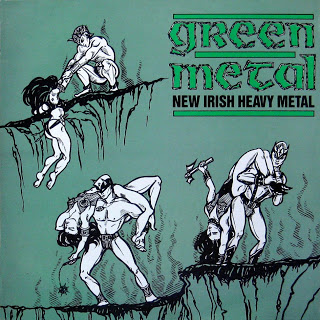
\m/ Celtic Heavy Metal \m/

While Shite’n’Onions has focused on Celtic punk and rock since inception there is one area of Celtic rock that we have never really touched on –\m/ Celtic Heavy Metal \m/.

This omission is somewhat ironic as I first heard the mixing of traditional Irish music and rock through metal bands. My introduction to Celtic anything (with the exception of my parents Dubliners and Wolfe Tones tapes and successfully avoiding trad music at school) was through a band called – Mama’s Boys – 3 brothers from the North of Ireland raised playing traditional Irish music who discovered Horslips and had a Saul on the road to Damascas conversion from trad to rock’n’roll. Mama’s Boys recorded and toured throughout the 80s and while the infusion of Celtic sounds was somewhat sporadic (tracks like Runaway Dreams) it really perked up my ears. Small bit of trivia – Flogging Mollys’ Dave King was briefly singer for Mama’s Boys prior to joining the big league with Fastway (and former Mama’s Boys bassist and vocalist John MacManus now plays bass for Fastway). Mama’s Boys split in the early 90s after death of younger brother Tommy and the remaining brothers John and Pat want full into Celtic music with an band called Celtus who had moderate success in the UK.

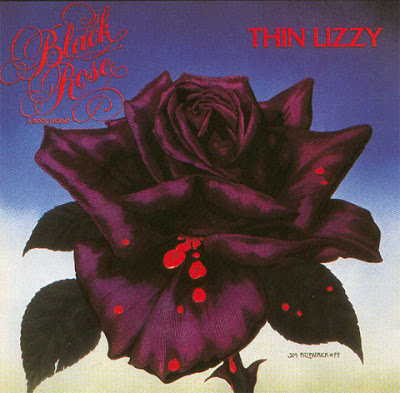
With my interest pricked I delved into Thin Lizzy’s back catalog and especially stuff like Emerald (please Flogging Molly cover this!) and the amazing Black Rose. While Lizzy never incorporated traditional instruments the guitars shreaded Celtic melodies like you wouldn’t believe.

Thin Lizzy lead me to Gary Moore and his 1987 Wild Frontiers album – the most complete Celtic metal/rock album I had heard to date – Moore took Lizzy’s Black Rose (which he played on) and added trad instruments – fiddles and uilleann pipes – and was joined by members of The Chieftains to make the ultimate tribute to the late Lizzy front man Phil Lynott.

And that was really my Celtic rock world (and yeah The Pogues existed but when you did the metal then that was all you did) through the early 90s. My interest in Metal wained in the early 90s as I opened up to newer sounds – Therapy?, That Petrol Emotion – and metal changed when Kirk Cobain slew big the beast that was hair metal and I didn’t like the sound of the new flavors of the month from Kerrang!! – Sepultura and Pantera and all the various shades of black, death and fart metal. One band I did catch by chance playing live around that time was Skyclad – the originators of Folk-Metal – thrash meets Lizzy”s Emerald with a full time fiddle player to boot – Skyclad were to open for Danzig in Dublin but Glen stubbed his toe and Danzig pulled out – Skyclad pulled together a last minute gig in a biker bar in Capel Street and they were amazing (audience filled with guys in kilts with clamors and this was pre-Braveheart). Skylclad had started something for the metalheads of Dublin. Me, I moved and moved on musically.

Interestingly both Celtic punk and metal bands stick within the musical structure of their respective genres. While the punk bands will see their roots in The Pogues and their forefathers The Dubliners and that drinking, fighting, rebel ballad tradition. The metal bands reference Horslips and further back to The Chieftains and focus on Celtic mythology and pre-history – the scally caps are replaced by blue face paint.

So, 17 years on there is now a whole sub genre of Celtic Metal with bands from Ireland, Germany and as far a field as South America. The scene developed first in Ireland and was primarily influenced by the aforementioned Skyclad and Horslips – early and influential Irish bands were Cruachan, Primordial and Waylander who all took the lead from Skyclad and combined trash/black metal with traditional Irish folk in a Horslips goes metal style.

“Skyclad were the original Folk Metal band I suppose and they certainly influenced both Waylander and Cruachan, but coming from Ireland I’m sure both Keith [Fay of Cruachan] and myself thought we had a divine right to play Folk Metal, especially as we’re both influenced by the Horslips as well.“

—Ciaran O’Hagan of Waylander (http://en.wikipedia.org/wiki/Celtic_metal)

Following on in the wake of Cruachan, Primordial and Waylande came more Celtic metal bands from Ireland including Geasa and Mael Mórdha and bands cropping up in places as diverse as Switzerland (Eluveitie), Spain (Mägo de Oz) and Germany (Suidakra).

So, with the help of Wikipedia and Youtube I thought we would take a look at the current crop of bands that Skyclad, Horslips and to a lesser extent Thin Lizzy can take the blame for:

Cruachan – Founders of Celtic metal waaaaaay back in 1992. Founding member Keith Fay was inspired by Skyclad and took what they were doing and added a Celtic dimension. Horslips were another big influence. Originally Cruachan were a black metal band infused with traditional Celtic music  though their metal sound has moved more towards traditional heavy metal. Cruachan will be the band most familiar to Shite’n’Onions readers as Shane MacGowan co-produced their album Folk-Lore. Shane-o also contributed vocals to versions of “Spancil Hill” and “Ride On”  on that album.

http://www.cruachanireland.com/

Eluveitie are a Celtic metal band from Winterthur, Switzerland founded in 2002. Switzerland was of course the original European home of the Celt’s. Eluveitie often sing in Gaulish (an extinct Celtic language). The band had decent chart success with their last release Slania in both the Swiss and German charts.

http://www.eluveitie.ch/

Geasa are a Celtic metal band from Dublin, started in 1994. Their style is traditional Celtic music merged with black metal. The band has released one demo album, one EP, and three full-length albums.

Mael Mórdha (founded 1998) are also from Dublin and play Celtic doom metal (ie Black Sabbath at their most depressed.) They describe themselves as “Gaelic doom metal”. The band tried to enter the Eurovision Song Contest 2005 as Ireland representative.

Mägo de Oz are from Spain and have been around since 1988. Their style is more traditional heavy metal (ie Iron Maiden) meets Celtic (band members included a violinist and flautist). Mägo de Oz has had some serious success in Spain and South America.

Primordial – are from Dublin and along with Cruachan are the Granddads of Celtic metal. The band was formed in 1987 and added a Celtic bent to their black/doom metal sound in the early nineties.

Suidakra are a melodic death metal (if you can imagine that) band from Germany with Celtic influences.

http://www.suidakra.com/

Waylander are from Norn Ireland and play more traditional heavy/power/trash metal with Celtic influences. The band were formed back in 1993 and were part of the first wave of Celtic metal bands emerging from Ireland – as with Cruachan, Horslips were a huge influence.

Celtic Legacy were another Irish band that were around from the mid-nineties to 2010 (they basically went broke trying to finance their own stuff). The band were heavly influenced by Thin Lizzy at their Celtic best.

Home

Joe Strummer: A Guy Named Joe: Rest in Peace / Remembering Mr. Strummer, and “The Only Band That Mattered.”

January 2003

A Guy Named Joe: Rest in Peace.

Moving. The floor was moving. And when I say that, I don’t mean there was a packed dance floor and the seas of people gave the illusion the floor was moving. I mean, the floor was physically moving, bowing up and down. I feared the balcony would collapse, so I braced myself, but never took my eyes off the man on stage and his rocking band of musicians.

To my right – skinheads. Not wearing scowls like normal, but vibing. To my left – a 50 year old man who told me he hadn’t been to a show in ten years. Ten years. Scan the crowd. Punks off to the right. Rastafarians grooving up front. Mods drinking pints and dancing in place. Rudeboys having dance-offs. Normals all over as well. No, the kids will never be, as Jimmy Pursey once imagined, united. But this was damn close. As close as I’ve ever or probably ever will see. The occasion? Simple. Joe Strummer was in town (with his new band, the Mescaleros in tow) for the first time since the 80’s. Everyone who was once or presently part of any scene in the city, it seemed, was out to pay his or her respect. In these trying times, the Clash and Joe in particular always seemed to rise above it all – truly representing the credo they wore in the 80’s – “the only band that matters.”

But now, time has dictated, as it so often does, that everything must change. Now we reflect on what has come before and reassess it, reevaluate it and, goddammit – just listen. Joe is gone. Nothing’s gonna bring him back, and I don’t really give a damn about the circumstances surrounding his passing. There is no need for me to give you a tired history of the Clash or Joe’s early days in the pub rock scene. There are volumes of quality (and not-so-quality) work out there that do that more clearly and more accurately than I would ever be able to do. No need to present a discography. If you are a fan, you know what Joe has produced over the years. Nah, words, as so often is the case, wouldn’t do this passing justice.

The Clash, as you all probably know by now, are due to be inducted into the Rock-n-roll Hall of Fame in 2003. They were set to play a quick set at the induction ceremony, and maybe as a precursor, Mick Jones had been joining Joe onstage in England as of late, their well-known feud seemingly in the past, as Joe being the cool bastard he was has been putting the blame on himself for years now. So maybe, just maybe, the circle was complete – the bands two headmasters playing together for the first time in years signaling to someone somewhere that all was well in the rock-n-roll universe. So maybe Joe’s passing wasn’t all in vain. Maybe now his and his band’s greater message will be heard louder and clearer than before. Maybe.

But that unity vibe at that show, the sheer potpourri of the crowd that night – I’ll never forget it. I don’t think Joe did, either, as he said in print oft times that the Chicago show that I mentioned was one of the best he ever played – said it had a vibe, man. So Joe showed a lot of people the way, he gave them something to believe in, and although he’s gone, the vibe he talked about – the Strummer vibe – that’s forever.

So, in the end, I guess I simply know this – one of the coolest men to ever put on a pair of boots and play rock-n-roll is gone. I think I’m gonna cue up “Death or Glory”, have a drink, and vow to never fuck a nun and later join the church.

By Sean Holland
Remembering Mr. Strummer, and “The Only Band That Mattered.”

I think I was about 12 years old the first time I heard The Clash. It was on one of those MTV rip-off, “Friday Night Videos” program shows. . I’m sure it was “Rock the Casbah”. I liked the song, but that was about it way back then. A few years later, I started listening to punk quite regularly. I started with stuff like Black Flag, Minor Threat, T.S.O.L., GBH, and like many other kids, the music just exploded from that point on. Listening to punk band, after punk band, after punk band. I was hooked.

By the time I “re-discovered” The Clash, I realized I had heard these guys before. It suddenly hit me like a ton of bricks…. These guys are a bit different, a little bit more than the standard bands I was listening to at the time. It had more than just three thrashing chords, and the galloping drums. The Clash were one of those bands who introduced me to other music out there. “London Calling” introduced me to reggae music, and to ska music. The Clash made me open my eyes to everything else that was out there. So, I expanded my horizons and had a lot of music to catch up on. I was a busy man.

A few years ago I started listening to The Clash again. It was kind of like catching up with an old friend. Most of my old cassettes were long gone, so I slowly started recollecting them on CD. Finally, I was listening to Joe Strummer’s solo work. I don’t recall how I got ” Global A Go-Go”, It might have been after watching Black Hawk Down, and hearing “Minstrel Boy”, or maybe Joe was playing on David Letterman, or the Conan O’Brien show. What I do remember was hearing “Johnny Appleseed” and thinking goddamn how good it was. Once again I was hooked. After all those years, Joe Strummer still sang about the truth, still played with that fire, and most important, he was still very down to earth. Joe may have been older, but he was also wiser. Not to mention, he was still a very cool dude! I was glad I had the album. Everything was going along fine, until that awful December morning, when I heard the news…….

I never met Joe Strummer, but I also never felt so awful about the passing of someone I had never met. I was upset, and angry. I felt like we all were cheated. Somebody like Joe Strummer wasn’t meant to die, it simply just wasn’t on the agenda. You’d figure it was meant to be someone else, somebody less important. It just goes to show that the good ones are always the first to go.

I’d like to simply say, “Joe Strummer, Rest In Peace,” but, I think it would be more fitting if I said that “I hope you give ’em hell, up there in heaven, Joe!!”

Bless that man,

Brian Gillespie

Paddy Punk in Japan

December 2008

Paddy Punk in Japanese Rustic Stomp Scene

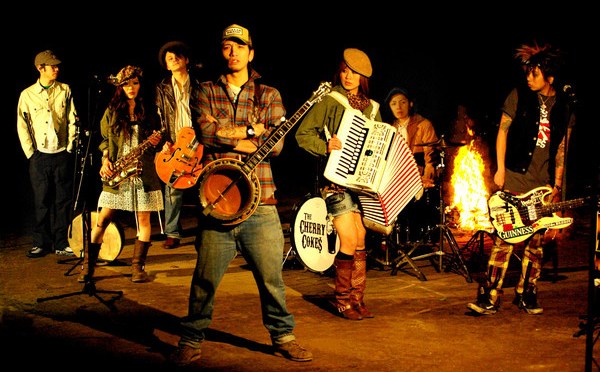
After being exposed to the Japanese Paddy-Punk band, THE CHERRY COKES by a fellow Shite’n’Onions contributor, I decided to investigate further into Japan’s Paddy-Punk scene to see if there were more bands like this, with an appreciation for the Celtic folk-punk music, and a flair for the execution of it with such infectious zeal. I found a number of bands with some really good material and I began to aurally gobble this stuff up, collecting whatever I could get my hands on.
Development, Styles, and Practitioners

Japan has long been known for its embrace of western customs, styles and tastes, and then putting a twist on it to make it all their own. This has held true with music as well. In the field folk-punk music, however, that ‘twist’ falls under the larger umbrella term of “Rustic Stomp.”

The term “Rustic Stomp” was allegedly coined by the band, The Tokyo Skunx, (often written “The Tok¥o $kunx,”) back in the early ‘90s, and seems to be characterized by mixing the more folk-style music instruments along with the typical rock instruments. In almost all of the bands that I have looked into, certain instruments are always present: electric guitar and a drum kit are invariably accompanied by a bass fiddle, (AKA “double bass”, “stand-up bass”, or according to many liner notes, the “wood bass,”) an accordion and a banjo. Various other assorted instruments are to be found as well, including tin whistle, trumpet, mandolin, saxophone, bouzouki, fiddle and/or bagpipes. It is a safe guess that it is the instrumentation falls under the “rustic” portion of the moniker, while the “stomp” is quite blatantly the music. Punk rock tempos and structures are mixed with elements of rockabilly, ska, cowpunk, bluegrass, country/western or seemingly any other passing influence, tossed into a giant blender, set for purée, and served at dizzying speeds. Some of the big names in the style, (aside from THE TOKYO SKUNX,) are DOG’GIE DOGG, THE CABALLERO POLKERS, and THE FUJIYAMA KINGS. (Bear in mind, that this is by no means a comprehensive list as my knowledge of these bands is quite limited.)

Among the assortment of western-influenced styles and combination of styles, is our own Celtic folk-punk. And the Japanese bands that have chosen this have continued with the manic, explosively hyperactive and energetic treatment as their fellow “Stompers.”

As some bands cross lines and can include ska, reggae, bluegrass, or a number of influencing sounds (or combinations of sounds,) on a single release, their are some bands that could be considered “Paddy-Punk” without an exclusive commitment to Celtic-influence material. A good example of such a band is THE CLASSIC CHIMES. Referred to as “The Japanese POGUES,” to me their sound is less in the Irish/Celtic style than in a some country/rockabilly with some Irish as well as “spaghetti-western” sounds stirred in. THE CHERRY COKES are another band who blur the lines between their influences so smoothly that sounds bleed into each other without the confines of definition.

Rustic Stomp in Celtic-Styled Bands

Those bands who are entrenched and committed to the Irish/Celtic side of Rustic, seem to advertise this intent in any of a number of ways. Although through the music is the most obvious way; cover/traditional songs and or jigs, reels and hornpipes, for those bands with more original material, a band name says a lot. Much like many bands in west, an Irish-styled rustic stomp band is often identifiable through their name: THE CLOVERS, THE ROYAL SHAMROCK, THE CROAGH PATRICK and MT. PAIOT’S, (formerly “MT. PAIOT’S OIRISH ORCHESTRA.”) You hear these names and you can guess what to expect. JUNIOR, on the other hand, have chosen to wear their hearts on the sleeves, or kilts, as it were, and tip their musical hand through wardrobe. Every photo of the band, JUNIOR, that I have seen, the members were proudly bedecked in various tartans. Also fairly indicative as to the music.

Comparisons and Recommendations

If pressed for recommendations from this arena, I would have more than a single candidate to suggest. If one were looking for a very western sounding, paddy-punk-style band, I might steer the listener towards MT. PAIOT’S ‘Northland Stomp’ CD due to its high ratio of English lyrics, (or at least in the song titles and liner notes,) and familiar phrasings borrowed from bands like FLOGGING MOLLY, (“Dirty Town” samples fairly blatantly a piece from “Devil’s Dance Floor”,) THE POGUES, (a version of “Repeal of The Licensing Laws” that is almost note for note!), or just some of the mood akin to those of bands like MUTINY, (“Devil’s Waltz”,) or THE GREENLAND WHALEFISHERS, (‘Wakari-Sake’.)

If however, the listener wanted to experience the origins of Rustic Stomp despite the influencing styles, THE TOKYO SKUNX are among the bands that really pioneered the movement in Japan, (as well as reputedly coined the term!) and have a sound with more “spaghetti-western”/cowpunk/psychobilly flavors at work than anything Celtic. This band also has a very large catalog to choose from.

THE CHERRY COKES, (a name recognized by most S’n’O-ers,) provides a good mix of both the Celtic and non-Celtic Stomp, delivered primarily at the typical amped up pace that this style’s sound is so frequently associated with. The availability of these guys’ material makes them very attractive for checking out as well.

The CDs by bands with the strongest thematic ties to the Celtic influence, but with a delivery firmly entrenched in the identifying exuberance of the Rustic Stomp scene, are 2003’s ‘Rights’ by the band JUNIOR, or 2007’s ‘Hell’s Jig’ by THE CROAGH PATRICK, (see the S’n’O review by ahem your humble author!) Both blast through track after track with the speed and dizzying precision of a scalded cat! And both provide a very accurate portrayal of this facet of the scene’s potential.

My own personal favorite, (at least as of this writing,) has to be 2004’s ‘Greenfield Rumble’ by THE CLOVERS. This CD spends as much energy on creating a unique mood for each track as it does for for any other aspect involved. Each song stands apart from each other yet retains that “family resemblance,” creating a disc that remains fresh and interesting all the way through. I was also quite pleased to hear, (finally,) a song by a Japanese band that incorporated some Japanese-influenced sounds, (albeit created by the banjo,) and segued into a song that bridged that gap so smoothly, that if any tune could be nominated to represent the Paddy-Punk end of Japan’s Rustic Stomp, this one would walk away with it. The Shite’n’Onions site doesn’t handle the Japanese characters well enough for me to write the name of the song, but it is the second-to-last on the CD, just before it wraps up with a slow bagpipe tune that just gushes with touching, mournful emotion.

Or, if you are the type to sample as many flavors off of a buffet as you can fit on one plate, then 2007’s various artists’ CD, ‘Green Anthem,’ contains 14 appetizers from across the Japanese Rustic-Stomp steam table, including MT. PAIOT’S, THE CROAGH PATRICK, THE CLOVERS, as well as bands named NANCY WHISKEY, THE MERRY DRUNKARD BAND, and PRINCE ALBERT.

Some Vendors

One of the biggest hurdles that I found in acquiring some of the mentioned material has been the language barrier. Most of these bands have names in English so a web search is easy enough, but once a site that sells them is found, it is usually completely in Japanese. Fortunately, the ever growing influence of English has been recognized in Japan and many vendors’ sites are now available with a built in translation. http://www.Amazon.co.jp has an “In English” button in the upper right corner of the page, as well as Amazon.com’s “Used & New” feature for a bit of a reduction in price! http://www.HMV.co.jp also has an “English” feature. http://www.jpophelp.com is an American site devoted to Japanese media so it is fairly easy to navigate. That ease of navigation comes at a price, though, as this site, with its massive selection and English fonts was the most expensive vendor by far, even factoring shipping and handling charges, (the second biggest hurdle!).

Links

Fortunately for the linguistically limited like myself, the majority of these bands, I have found, have their MySpace pages written in English. This is quite helpful when it comes to ordering their releases as they more often than not will list who is carrying their material. MySpace is also great for hearing a track or two to see if a band catches your ear. So to assist in this, I put together a MySpace list of a few bands:

MySpace
THE CHERRY COKES: http://www.myspace.com/thecherrycokes
MT. PAIOT’S: http://www.myspace.com/mtpaiots
THE ROYAL SHAMROCK: http://www.myspace.com/royalshamrock
THE CROAGH PATRICK: http://www.myspace.com/thecroaghpatrick
THE MOONSTOMPERS: http://www.myspace.com/moonstompersyasu
JUNIOR: http://www.myspace.com/jprjunior
PRINCE ALBERT: http://www.myspace.com/princealbertcountry
THE CABALLEROS POLKERS: http://www.myspace.com/caballeropolkers
DOG’GIE DOGG: http://www.myspace.com/cowtrash
PING-PONG DASH: http://www.myspace.com/pingpongdash8969
TURTLE ISLAND: http://www.myspace.com/turtleislandpunktribeorchestra
THE RADIOTS: http://www.myspace.com/radiots

For me, discovering the world of Japanese Rustic Stomp was like being a child again and finding a hidden room full of toys in the attic. There is a thriving scene in Japan of the exact style of music that Shite‘n’Onions was built on and I am just scratching the surface. The song ‘Ace of Clover’ off of MT. PAIOT’S ‘Northland Stomp’ CD has a line that, (through it’s broken English,) reads, “We met the Irish and they’re great guys. Its our own music!” I love that. The Japanese have taken this music and embraced it as their own and created some great material for this genre.

Christopher Toler, THE Blathering Gommel

Neck come out swinging – Interview with Leeson O’Keeffe

November 24, 2009

(S’n’O) First of all, congrats on finally getting “Come out fighting” released in the UK. Why the delay and when can we expect a proper US release?

(Leeson/Neck) Thanks John – it’s a massive relief! Well, it was set to go a year ago, but there were some last minute glitches that, due to tour commitments, we weren’t around to fix. So it got postponed – which gave us & the label time to reflect & it was decided, as Wispy was back off ‘the Subs bench’ to let him overdub some bass parts, re-master it (at the right level), completely overhaul the artwork & get proper PR campaigns working behind the album – which meant putting it back to now to enable all that.

(S’n’O) The title – “Come out fighting” and the fists up on the CD sleeve. I’m guessing there is a statement there?

(Leeson/Neck) Yep – but it’s more about having a ‘pugnacious’ state-of-mind rather than going down the boozer ready for a ruck. It’s down to the title track, which is about those times in life when the shite really hits the fan & you, literally, feel like you’ve gone 15 rounds with Mike Tyson & you’re on the ropes, emotionally, with the guy ready to throw in the towel. So you really have to dig deep, & figuratively speaking, get off the ropes, catch your breath, get your balance – put your guard up, set your brow & be downright bloody-minded & take the fecker on! If ye know what I mean…

(S’n’O) I heard a few complaints from long time Neck fans that while the production on “Come out fighting” is 1st class there’s a lot of older Neck tracks re-recorded. Any particular reason why?

(Leeson/Neck) Of course: rather than selling people short, we’re just trying to give them the best we can – we thought that, as this is our first world-wide release, & particularly with legendary producer Pat Collier’s alchemy at our disposal, we had the opportunity to re-visit & improve upon songs that we love & are live favourites, but the previous recordings are either really old or were recorded either so cheaply, in a rush or mixed at silly o’clock with one eye on the clock, that we find them hard to listen to now. We knew Pat could help us do a better job of them. Which we have, and which, it appears, everyone does actually agree with!

(S’n’O) We’ve been following Neck here in Shite’n’Onions for about 8 years and while a lot of bands that started out around the same time as Neck have had a lot of success stateside Neck are still a unknown quantity – do you feel disadvantaged being based in the UK? Any plans to raise your US profile.

(Leeson/Neck) Well, none of our stuff’s been widely available in the US up ’til now (apart from a Heroic effort via your very own ‘Shite ‘n’ Onions’ – named after on of our very own tunes! – with ‘Here’s mud in yer eye!’); Also, the costs of touring & promotion without big label backing make things virtually unfeasible for us. But, despite that, because of the immense support for us over there from you guys – we’ve tried to hang-in there. We know we’re a good band & things are progressing: our two U.S. trips last year were proof of that. It’s just finding a way to make sure people know about us, & now that we’ve got a U.S. label – Abstract Recordings –  who are going to get behind the album, hopefully we’ll get our arses back over there & put together a tour around the album release in the new year.

(S’n’O) Finally, with “Come out Fighting!” finally out. What are Necks next plans – tours, next CD?

(Leeson/Neck) Well we’ve started the rolling UK tour & then, with the album being released in the USA the week before St. Patrick’s Day, it makes sense that, if it’s at all possible, we need to be in the U.S. for that – so we need to get onto things like ShamrockFest in DC, etc. to ensure that. Then we’ll be touring the album in Europe in April, with more dates & festivals all over the place to follow throughout the summer into The Fall / Autumn – so 2010 may be our busiest year ever! Release-wise, we’re starting to work on the next Neck album, & we promise it will defo be all new material.

(S’n’O) There’s also a rumour of a CD of covers already recorded, any truth in that?

(Leeson/Neck) Yes indeed: we’d already recorded a covers album (with Pat) before ‘Come out Fighting!’, but it was ultimately felt that it was better to put out an originals album as a first release. It was inspired by Johnny Rogan’s writings &, is, subsequently, ‘Necked-up’ versions of songs by other 2nd & 3rd-generation Irish artists – from Johnny Cash to The Libertines. It’s a testament to our contribution to popular music & how far we’ve punched above our weight! The front cover & title’s actually our best-selling T-shirt ‘Plastic ‘n’ Proud’ (‘Plastic Paddies’ is a derogatory term – so we’re turning the insult on it’s head, like black folk do with the ‘N’ word). The version of The Sex Pistols ‘Anarchy in the UK’ is already reaching cult status! (there’s a clip on YouTube of 5,000 people singing along to it at Glastonbury festival)!.

Potato-eating, Whiskey-drinking, Bog-trotting, CELTIC PUNK ROCK since 2001