WAGES OF SIN VS THE RUMJACK

September 5, 2009

JESSE ‘WAGES OF SIN’ VS WILL RUMJACK: A CONVERSATION

The following is an uncut, unfiltered, unwashed, unedited, uncensored conversation between Jesse Stewart of Seattle’s rockabilly Appalachian death punk gringos, ‘The Wages of Sin’, and our own Rumjack, Will Swan.  First instalment as is follows:

[JESSE]: So, young Swan–what are some musical styles beyond “Celtic” and punk that have had a big impact on you? Where did you first hear them?

(WILL):  Yeah, the old ‘Celtic’ vs ‘Punk’ model, ay??  Well, there’s  a lot more to it than that, of course.  You know, I see songs – maybe a lot of people do – in terms of the light in those songs, the actual daylight or moonlight or streetlight or bar lights.  The elements of the setting.  And I’ve always dug the way that Spaghetti Western music, if you will, or ‘horse opera’ sort of music, has this big rootsy sound that really resonates the sense of wide open spaces.  There’s this Spanish/Mexican component to it, of course, the whole Day Of The Dead thing, the romantic violence and violent romance.  I believe you’ve trod this perilous path in your own music, Jesse?  If Ennio Morricone more or less galvanized it, then he was certainly taking a sensibility that was always there.  Cowboy music, flamenco music.  Big rock’n’roll and rockabilly bottleneck guitar sounds.  Big resonant Gibsons or Gretschs, I’m not sure exactly, I’m not a string player.  But that sort of thing always strikes a chord, you hear it in Reverend Horton Heat, you hear it in punk rock (like Rancid’s ‘Django’).  The Pogues celebrated it so fucking gloriously in ‘Rake At The Gates Of Hell’, which is just totally soaked in sunshine and blood and dust.  Coming from a country of wide open spaces, and being someone who has done road trips my whole life, as opposed to being some suburban couch potato, that’s always appealed to me.  There’s an serious outlaw mythology in America and Australia that’s part of this also.  And then there’s the mad religious imagery, that’s part of that gunslinging thing, too.  I’d say that I felt I’d come full circle when I stood with the cathedrals of Portugal looming over me, just standing there in their shadows above the crypts full of bones, totally blitzed on Portuguese white port, and thought “fuck yeah, this is what it’s about!”.   I’ve got this instrumental in my back catalogue somewhere, maybe Rumjacks will do it, called ‘Dos Gusanos’, a tequila brand I once picked up in a Portuguese bottle shop in Sydney.  I just dig all  that stuff.  I’m not Catholic, but I dig that Spanish style of Catholic imagery, to put it mildly.  You’re a gringo like me but wouldn’t you agree ….??

[JESSE]: Man, I can tell already it’s going to be hard to keep this on track, you’ve raised a half-dozen interesting ideas that I could follow on some meandering  tangent or other. I’ll try to stick to one at a time… I’m struck by your idea of seeing the light in songs, it captures the way music can tickle so much more then just the ear — all the emotions it can evoke, the way sense-memory will kick in for places you’ve never been, places that might not even exist. That feeling you had at the cathedrals of Portugal, that sense of the sublime (in the original sense of the word) — it does seem to strike one in churches and graveyards, doesn’t it? Certainly those types of sounds — the ones that evoke dusty old churches and sun-baked little towns, blood and dust and horse-sweat and the hero dying with rose in one hand and a pistol in the other — are a big part of my influences. The cowboy/flamenco thing, rockabilly and classic country (which I played for years before the Wages). So what do you think is the appeal of those sounds — what ties it to the Celtic or Punk-rock influences? I’m wondering if it’s the rebel thing, the outlaw — I can see ties between the American/Australian mythology (which have some interesting parallels in and of themselves) and the Irish/Scottish ‘rebel’ mythology. There’s a common thread there celebrating the loner; the man against the world; the doomed, romantic struggle against the tyranny of that overwhelming foe.. The fight to save your way of life (which is in itself interesting, since it’s a fundamentally conservative point of view). And of course Punk is all about rebellion against the status quo (putting aside that it’s become the status quo in some ways…), all about your own way of life. Is there some common mythology uniting the vision behind the music? What do ye reckon?

(WILL): I reckon some sense of rebellion is inherent in the music, both overtly and indirectly.  It gets represented in different ways; in rockabilly, I suppose there’s this time capsule around its aesthetic that preserves a sense of postwar rock’n’roll rebellion. That whole hyped menace of ‘fifties alarmist news reels, delinquents and tearaways and all that.  Now, over half a century later, this is more a case of honouring something, perhaps?  Part subculture, part quaint historical re-enactment, part evolving musical form.  And then there’s the whole Confederate thing going on in that, which is represented internationally.  We had a bloke at a Rumjacks show who had a great tattoo, ‘The South Pacific Will Rise Again’, he was a burly Islander.  I thought that was great.  I might be generalising but I have always seen rockabilly as essentially ‘southern’ music that took on everywhere else but carried implicit and explicit rebel imagery with it.  And I think about it springing from Scots-Irish environments and sometimes wonder if Johnny from our band has rockabilly hardwired into him, given his Scots-Irish background, he’ll hate me for saying it, but to me it just rings true!

The rebellious element is represented in so many ways, from gang vocals to pure volume to a common emphasis on drink and drunkeness.  I’ve looked at this last one from opposite perspectives.  Drunkeness is just a lens – a way of literally looking out at the world –  and music celebrating it isn’t really celebrating the drunkard so much as how he sees the world.  In that sense, making music on the subject is a pretty pure take on things.  Because you feel liberated when you’re drunk, songs celebrating that sensation are an inevitability.  But short of smashing things up because you’re drunk, you really might as well be eating chocolate by way of a ‘rebellious’ act as getting sideways drunk.  It’s just a valve for most people and that’s fair enough, although the Saturday night barroom hero is probably just some obedient citizen or henpecked wage slave..  That was never my own deal when it came to drinking, I was in it on a totally different level and lived a  totally different philosophy, but I suppose there will be songs that celebrated the liberation-by-numbers that most people treat drinking as.

The romantic underdog ‘Celtic’ sensibility always comes up, of course.  This simplified narrative of the REBEL Irish & Scots is such a huge phenomenon, a really, really complicated, messy, ridiculous, stupid, justified, heartbreaking, untold, true, false, tragic and bawdy story all in one,  and all through the history of the British Isles and the history of the diasporas.  Some bands and songwriters choose to represent it in ways that are crude and absurd if not completely offensive.  Some incorporate it in expressions of profound poignancy.   This concept of identity probably differs slightly throughout different parts of the Celtic diaspora.  It is characterized by amnesia, assimilation, denial and romanticism but it also bears the bloodstains of truth.  It’s a huge subject in itself, full of contradictions.  But the fact that we are talking about it, acknowledging ‘it’, the ‘Celtic rebel indentity’, means there must be something in it, whatever that is.  And for the record, just so you don’t think I’m some cold-blooded casual observer, my own family tree is, for a large part, made up of Scottish and Irish people who came to this country through the 19th Century up until the First World War, and I also have American Scots-Irish blood, and Welsh, (and I’ve got cheesey pugilistic leprechaun and Clan motto tattoos, so there!).

And perhaps the ‘rebellion’ doesn’t have to mean singing hoary old IRA songs, or Jacobite songs, maybe just the music itself, the actual MUSIC, maybe that’s an expression of survival and proliferation, if not rebellion.  Because music that came on leaking boats, after Highland clearances and evictions and all, well, if that music has survived and evolved in the New Worlds, then that’s something in itself.

And there’s another big ol’ rebel motif in a lot of the music, too, and that’s the whole PIRATE thing!  ‘Cause pirates are fun and pirates are cool.  Now, Jesse, I’ve got to ask … does the whole nautical thing appeal, or what !?

[JESSE: ] Well I think it’s pretty clear the nautical thing appeals to me, haha (I’m listening to the Dreadnoughts as I type this…). At least on the salty surface I think it taps into the same emotional response as the dusty vistas discussed above. The (romanticized) sense of adventure, exploration, possibility – the FREEDOM of traveling to new ports of call, of doing whatever – laughable, really, since you’re trapped on a boat aren’t you, and subject to the officers’ every whim? But that’s the dream anyway, the fantasy. And the endless sea, that vast and beautiful and terrible expanse, the smell of salt and fish and seaweed, the birds wheeling overhead – it gives me the shivers.

And pirates, who doesn’t like ’em? Most kids like pirates – I know I devoured “Treasure Island” and “Kidnapped” and all that RL Stevenson stuff as a kid, plus non-fiction books about “the worst pirates in history” and the like. The N.C. Wyeth paintings in Treasure Island are still my mental image of what pirates should look like.

And of course pirates tap into that whole rebel/outlaw thing too don’t they? Masters of the sea, doing what they want, etc. – not at all like the merciless thugs they actually were for the most part (same with the sentimental vision of Old West outlaws like Jesse James, who was pretty much a confederate/segregationist terrorist). You only have to look at real pirates today to see that pirates are about as glamorous as a junkie who mugs you for a fix, but we of course prefer the noble Robin Hood vision of it.

I like the image of ‘rebel’ music expressing survival and proliferation, rather then just the romantic doomed battle – isn’t survival and proliferation the ultimate rebellion? That seems like a piece that’s often missing from ‘updated’ takes on roots music – the positive, celebratory side of it (Gogol Bordello comes to mind there). Many acts seem to have kind of a shallow understanding of the music and its history, and just grab onto a few cool images or tropes. Natural enough, it’s how we all start with, but you hope it leads to a deeper understanding at some point. It’s what leads to those ‘crude and absurd’ representations of the whole Celtic/rebel narrative you mentioned, and also to a lot of the (in the USA anyway) ‘St. Patricks’ Day’ drunken-Irish stereotypes. (And BTW I am NOT trying to present myself as some kind of expert on any of this stuff, I’m just barely scrathing the surface at this point.) It happens with country music too – lots of people love Johnny Cash singing “Folsom Prison Blues” or “Cocaine Blues” but don’t want to hear him sing “I Was There When It Happened” or any of the religious stuff. It’s all Saturday night and no Sunday morning, if you know what I mean.

It’s funny, because I find that stuff very moving, and I’m not religious at all – I generally consider myself an atheist. In fact, overt religious (particularly Christian) lyrics usually turn me off to a song or artist right quick – except of course for the dozens of exceptions, ha. I had someone listen to a bunch of Wages songs once and he said “A lot of angels and devils”, and he’s right – that imagery resonates even though I can count the number of times I’ve been to church without running out of digits. I don’t know if it’s just cultural memory, or if it’s maybe that so much religious imagery is built on mythology that goes back to the first hairy bastards sitting around a fire telling stories. But I find those symbols really powerful, even if I don’t have much use for the organization behind them. You mentioned earlier digging that ‘mad religious imagery’ – do you connect with it in a religious or spiritual way, or more as a part of the atmosphere you try to conjure when you write? What’s your take on the religious influence on roots music? It’s certainly a huge part of the catalog going back…

(Will): Well, I’m going to throw in a disclaimer here myself and just say I’m not a bonafide folklorist, but this is really interesting stuff.  As far as I know, there are NO Australian folk songs that really even mention religion.  And as for the Irish component of the ballad tradition – which is a major part of the whole deal – I can’t really think of too many at all.  Of the cuff here, there’s a song that parodies piety (‘The Glendalough Saint’) and one that is a sort of comical take on sectarianism (‘The Old Orange Flute’).  I can’t think of too many that espouse the Catholic church or anything.

That which I relate to on a spiritual level can be found in Kerouac’s ‘Dharma Bums’, or in the films of Terrence Malick  (‘The Thin Red Line’).  I’m not sure what it’s called.  Maybe ‘eternity’, maybe something taoist, who knows.  That sense informs and reflects my entire world view, it is a non-belief system, or an all-belief, if you will.  Maybe on some subtle level that will come into my writing.

(BUT … I reserve the right to dig all and any religious aesthetics and characters.  It’s all FOLKLORE, after all.  But my themes in writing seem to be pretty much wordly, especially in relation to ideas of liberty.  Liberty from the shackles of addiction, or stagnant relationships, or from jobs and ruts that have you wanting to jump out the window.  Those things bring on what Bukowski called “death in life”.  And you mentioned Gogol Bordello; I LOVE their whole take on freedom and liberty.  I always loved that band and I listen to them more and more now, my girlfriend is Hungarian-Australian, that gypsy stuff is on high rotation).

But in folk music, I’d say you can’t talk about Appalachian and American country music without acknowledging the religious subjects and themes.  They’re just so much part of it all, aren’t they?  And often, because of the sheer sincerity involved, nobody can really knock that stuff.  Far from it, everyone loves it.  You can take the most humanist, secular, intellectual, urbane, free-thinking, atheist music fan, and nine times out of ten they’ll really dig everything from the ‘dark’ Johnny Cash spiritual songs (a perfect example, by the way, Jesse) to the ‘O Brother, Where Art Thou ?’ soundtrack. ‘Will The Circle Be Unbroken’, ‘I Saw The Light’ … all those old-timey songs.  I think it must be the sincerity and ‘rawness’ of the delivery, as opposed to any desire for a religious connection.

Nick Cave has often incorporated these elements very directly.  So too has Tom Waits, more often with a gospel strain are the true masters of the craft.

Perhaps those themes of redemption are universal, and perhaps they are part of the rock’n’roll mythology, the opposite of excess and ‘sin’?  Taken to its extreme, this idea is explored in ‘hanging songs’, if you will.  Not just the concept of the doomed outlaw, but of the human man literally at the end of his rope.  To acknowledge this subject in song is not something undertaken lightly.  For my own part, the idea of state-sanctioned slaughter is a disgusting barbarity that has always haunted me; it’s kept me awake at night.  It still does sometimes, the same as when I was a kid.  And when it comes to death row songs, NOBODY does writes it like Steve Earle.  I think a lot of Australians have completely forgotten – if they even bothered thinking about it in the first place – that (white) Australia was founded in the shadow of the gallows and the cat o’nine tails.

For the record, Jesse, my favourite Wages Of Sin song is ‘The Drunkard’s Prayer’.  Not the word ‘Prayer’ in there!!  I think it is emblematic, it’s a terrific song that really honours its musical and thematic roots.  I love it because it is purely rootsy, unrestrained, ambiguous and whimsical, and it just rocks hard.  And I’m a recovered alcoholic, although I didn’t find sobriety through ‘that old time religion’.

We’ve covered a fair bit of ground here, Jesse.

[JESSE] I think you’ve summed it up pretty nicely, so I’ll just add a few odds and sods. Interesting (but maybe not surprising) that so much of the religious stuff comes out of the USA, that protestant gospel tradition combined with our legacy of slavery–all those spirituals and field songs. That actually touches on your concept of liberty as a subject matter in a more literal sense—songs about freedom, and singing as a way to find some kind of relief, some kind of escape, when your body is in shackles. Like Solomon Burke sings: When one of us is chained none of us are free.

You could argue that ‘Tyburn Jig’ takes the hanging concept lightly—certainly the lyrics there are in a bit of a contrast to the delivery. I had some friends of my brother who played that at their wedding! I don’t think they listened to the words too closely, haha. I’m with you on Steve Earle—I had the great fortune to see him on the ‘Train a Comin’ tour, just after he got out of jail. It was one of those shows—you know what I mean, yeah?–that was just magic from start to finish, easily one of the best musical experiences of my life. And he played ‘Ellis Unit One’, which hadn’t been released yet (the movie wasn’t even out). Just him and a guitar, and it was breathtaking—all the hair on my arms standing straight up, I swear to dog.

The Drunkard’s Prayer, yeah another religious metaphor, haha. It’s meant to be a bit ambiguous, it’s actually quite personal but I don’t like to be too literal with my lyrics, ya know? Ultimately though it’s not asking for sobriety (or personal salvation)–it’s looking for some hope for our species, our world, our universe…

For me I’ll have to go with ‘Paddy Goes To Babylon’ (at least this week). I’m probably mis-hearing most of the lyrics, but the chorus really resonates—it’s silver and it’s gold!–the whole thing’s got a kind of rough-hewn celebratory vibe to my ear, the perils and pleasures of Babylon. Kicking against your “death in life”–that pretty much captures it right there.

And with that I’m done rambling for tonight… Cheers mate, here’s hoping we can do it over a mug of coffee sometime!
Kilts, Celts and Croatians – the strange global rise of Celtic Punk

March 30, 2011

Last summer, I was invited down to NYC to meet Jim Lockhart and Barry Devlin of Horslips fame. The boys were over making a documentary for Irish TV based on the travels of Mickey McGowan, whose 19th century autobiography Mór an tSaoil (“The Big Wheel of Life”) documents the hardships of Irish immigrants in the USA and Mickey’s travels from NYC, to the steel mills of Pennsylvania to the Klondike gold rush. Mór an tSaoil was a major inspiration to Horslips on the albums Aliens and The Man that Built America (ok, can anyone say Cornelius Larkin?)

Both Jim and Barry were fascinated to hear about the Celtic punk scene in the US and the ever expanding global scene and one thing lead to another and on St. Patrick’s day, Jim broadcasted a short documentary on Irish national radio on Celtic punk, interviewing yours truly.

You can listen to the full documentary here:

bands featured include The Rumjacks, Belfast, Greenland Whalefishers, Mr Irish Bastards, Black 47 and many, many more.

BTW, I’m the one being interviewed with the sexy voice and the face for radio.

Thin Lizzy: Fame and Pain – The Curse of the Black Irish

Generations of Irish, both at home and in the States, have often spun misty-eyed, drunken yarns around the fire of the myth of the Black Irish. For some, this myth seeks to simply explain the age-old (and often disproved) theory about how so many of the native Irish have dark features – dark eyes, dark hair, in many cases, dark skin, and sometimes, more forebodingly, a dark soul. At any rate, sordid tales of the mixing of Spanish blood have been told by more than one Grandparent to a wide-eyed child when asked why they have the dark features they do.


For others, these tales hold a more personal meaning – they seek to explain the often self-destructive ways of a certain people – perhaps a troubled family member or friend – as the Black Irish were often described as ‘black’ not only for their features, but for their psyche – their moods,. Their addictions and their sometimes general bleak outlook on life. They were often said to be sullen and detached. In many ways, they often seem almost other-worldly. Famous playwright Eugene O’Neill was said to be a stereotypical Black Irishman. He could be light and playful one minute, and swing into a dark depression the next. His plays were full of Black Irish characters battling addictions of one variety or the other – some felt that these were the characteristic of the mystical Black Irish.

Whether or not these well-worn legends are true or not isn’t the point. The point is that these myths and preconceived notions live on, true or no, to stand the test of time. In much the same way, one of rock’n’roll’s favorite deceased sons – Thin Lizzy’s frontman, bass player and Black Irishman extraordinaire –Phil Lynott – fits the mold of these clichés to a tee. And like these tall-tales, although he has long since departed this world, his life, legend and influence live on in the canons of rock history.

Rather than give halfhearted history of Thin Lizzy, and run down a basic list of who played for them and when, I’d rather look at the myths and legends of the band and their frontman, Phil Lynott, and how he influenced a generation of bands to follow – how the myth, true or no, has persevered.

Mainly known for their twin-guitar attack (led by a revolving door of talent including Gary Moore, Eric Bell, Brian Roberston, Scott Gorham and John Sykes) and street smart, tough songs, Thin Lizzy pioneered the Irish Rock sound, and later even dabbled in and welcomed the punk influence.

The seminal album Jailbreak, with its “anthem-for-every-buddy-cop-movie-ever-made” “Jailbreak” set the world on it arse. Tough-sounding songs followed, along with successful tours, albums and singles, and also collaborations with Johnny Thunders and members of the Sex Pistols. Thin Lizzy songs could often do what so few could – provide hard and gritty tales, along with the softer, quieter ones – and often in the same song, showcased in such gems as “Cowboy Song.”

The twin guitar attack that propelled Lizzy was one that worked in unison – rather than work against eachother for personal glory, Lizzy’s guitar sound complimented one another perfectly, and Lynott’s bass provided and ever steady and driving backbeat. It takes only a listen to “Jailbreak,” “Fighting My Way Back” or “Bad Reputation” to understand that this band was something special. As a Lynott tribute site notes: “You find testimonies to Lynott in unlikely places, like the approval of hardcore artist Henry Rollins, or in the beautifully sad way that Smashing Pumpkins have interpreted ‘Dancin’ In The Moonlight’. Noel Gallagher from Oasis has paid tribute on his song ‘Step Out’, which echoes Thin Lizzy’s roaring version of ‘Rosalie’. Meanwhile, documentary film, ‘The Rocker’ demonstrates Irish music’s massive debt to Phil’s example. U2 benefited from his advice early on. Bass player Adam Clayton even paid homage by cultivating a well-intentioned Afro hairstyle.”

Phil, it was said, welcomed the punk movement as a kick in the ass to complacent rock’n’roll and, for a short time, formed his own punk outfit, impressed with all the freedoms the genre could offer. Lynott was indeed a free spirit. An impressive artist who had achieved much, but still had so much more to give. The group that could do so much would soon see blackness take root and their careers enveloped in darkness.

As the story so often times goes, success has its downsides, and in the case of Phil Lynott, alcohol and drug abuse would provide a tragic end to a troubled soul. In his prime, Phil Lynott was nearly untouchable. He could combine sentiment with humor and an everyman kind of grace. The emotion he put into his songwriting, singing and bass playing is obviously evident – but he was also had weaknesses. A curse of the Black Irish or just simply an incurable addiction? Those who knew him spoke of his shy and unassuming ways, said he was at heart a family man, but as time wore on and his battles with addiction intensified, he made no bones about his drug use, eventually leaving his cherished family.

In the end, the band disbanded and Phil slipped deeper into addiction. He did attempt to clean-up and he and Gary Moore were set to reunite for a project, and did record a tune called “Out in the Fields” which reminded me of the harder direction Lizzy once took. But the story, as is the case for many of the Black Irish myths, simply couldn’t end happily. Lynott fell ill due to pneumonia and died in January of 1986, the drugs and drink finally taking its toll on his heart.

So, in the end, the man passes into legend, another chapter in rock’n’roll and another example of how life is often times dark for the Black Irish. Thin Lizzy, however, continue to tell their tale with their music, as legions of fans act as modern day storytellers every time they put on a CD or LP. May their tale never be forgotten.

So the story of the black Irish lives and breathes in many ways, but why shouldn’t it? Why shouldn’t our lives be touched by magic, if only in a small way? As Phil himself mused, looking back on his early years and success with a cover of the Clancy Brothers classic “Whiskey in the Jar”: “We figured that people would hear it and say ‘There’s the boys having a good laugh at the Clancy Brothers. I was more of a poser in those days. I used to hang around Grafton Street. I was getting a lot of limelight probably because I was the lead singer and because I’m black. But why shouldn’t there be a black Irishman?”

You were a true Black Irishman, Phil. One of the best. R.I.P.

Sean Holland

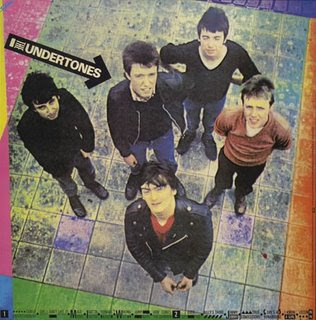
The Undertones: More than Just Paddy Ramone

October 2002

Inevitably, the comparisons occurred. Who the fuck are these guys? They’re just Paddy versions of the Ramones, that’s who. Huh? Joey, Johnny, Marky, Dee-Dee and Paddy?

First listen says, yeah, that’s a good call: Three-chord manic melody. Million mile singalongs. Subject matter about such no-brainers as chocolate and girls. No- brainers, that is, unless you are teenagers who think about such things. Unless that’s what matters to you. And it did to teenagers everywhere. No-brainers unless you wanna escape for awhile, not from a New York Bowery, but from a violence-ridden Northern Ireland. And Irish teens did. And this band rose above it all and did what they did best – wrote great songs. Fuck the comparisons.

And that, folks, is the humble beginning of one of Ireland’s finest punk bands, nay, BANDS ever. Derry’s favorite sons – I give you the Undertones.

Formed in 1975 in Derry, Feargal Sharkey, John O’Neill, Damian O’Neill, Michael Bradley and Billy Doherty’s average age was all of 15 years old. By the time this bumped up to 18, in 1978, they would have their first hit.

Legend goes that the UK’s influential punk DJ, John Peel, was so taken aback with the title cut to the Derry teens “Teenage Kicks” EP that he not only played the title track twice on the same show, but to this day, he lists that cut as his all-time favorite. One can see why. From the moment the tune starts, you know it’s gonna be a corker, and then Feargal adds his never-duplicated vibrato talents and off it roars.

Peel championed the song and the EP, which led to Radio One calling it “Single of the Week” which then led to the “Top of the Pops” appearance. It all happened so quickly that John O’Neill who wrote the tune said “One week we were buying these people’s records, and the next we were speaking to them.” It was this wide-eyed youthful surprise, and the bands everyman attitudes that was so appealing. These were regular teenage kids playing fast teenage music – and everybody loved it.

By the time the boys released their first album in 1979, they had the perfect punk-power-pop formula down, went Top Ten. They were writing anthem after anthem: “Jimmy, Jimmy” “Family Entertainment” and a perennial favorite of mine – “Here Comes the Summer.” These tunes were so effortlessly, youthfully perfect – singing about the summertime never sounded so genuine, never sounded so much like the summer since the Beach Boys.

Indeed talking about wanting to be a male model or how much you loved Mars Bars seemed right for the Undertones, and seemed a polar opposite to Ireland’s other much-beloved and equally as legendary punk outfit Stiff Little Fingers. John O’Neill explained it like this: “Music was an escape. I was definitely wrapped up in the whole rock-n-roll thing…to me, punk rock was like the 50’s all over again, the thing was SO attractive that talking about what went on in the North (the Troubles) seemed…..for old people.”

And so the Undertones blazed on. They released their second LP in 1980, “Hypnotized.” It was also a Top Ten hit and critical darling. This release still contained the trademark chocolate-pop. Indeed the first cut was the self-parodying “More Songs About Chocolate and Girls.” The song called the listener to: “Sit down, relax, cancel all other engagements. It’s never too late to enjoy dumb entertainment …” but the joke was on the critics – this release also signaled the beginning of the maturation process for the kids from Derry. More serious efforts like “Tearproof” appeared alongside tunes about hating your cousin on the Top Ten single “My Perfect Cousin.” Nevertheless, change was in the air.

In 1981, with the band’s third LP, “Positive Touch” it was evident that the band weren’t content to simply write fast three-chord songs. But the perfect pop continued. Songs like “It’s Going To Happen” with it’s trademark horns a nod to another Irish favorite, Dexy’s Midnight Runners, “The Postive Touch” and the highly experimental (for the band) “Julie Ocean” were still great tunes. Sometimes, I listen to these tunes only. Great stuff – but different than what had come before, that’s for certain.

The Undertones issued their fourth and final album “The Sin of Pride” in 1983. It was even more experimental than the last, and failed to sell, despite critical acclaim. The Undertones were still considered the best band in the country, and their live energy was still second to none, however Feargal announced he was leaving and the group disbanded soon after.

The Undertones career was one of unmatched influence (bands as diverse as U2, Shane and the Pogues, Geldof and the Rats and certainly newer punk outfits like Ash have admitted to worshipping at the Derry altar) and energy, the epitome of teenage punks showing the world they would make it on their terms, that they could grow and still be successful, laughing at everyone who didn’t like it along the way.

These days, I think the Undertones are doing reunion shows without Feargal, which seems absurd because his unique voice was one of their trademark qualities. Fittingly, though, since I suppose the Undertones have never listened to detractors. They’ve always played by their rules.

True to form, Michael Bradley once said: “It was great being in the Undertones. It was the best thing that could happen to us at that age, Mind you, it would’ve been better being in the Beatles……” Cheeky fuckers until the end. Irish Ramones? Nah. Just the Undertones, man. The Undertones.

Sean Holland (?)

The Tossers: A shot with T. Duggins

October 2005

The scene: a small nearly empty part of Providence in a nearly empty bar scattered with various levels of punk rockers. The bar itself in the basement of what used to be a club is laid out nicely and looks too classy for the clientele this evening. The bartender looks more like a rave kid who seems only mildly amused at his patrons this evening, but is pouring a wide selection of beer and booze. For most though the choice is clear, the nearly local beer Narragansett.

My brother and I made the Monday evening trip down to the bar in little over an hour which is pretty impressive considering I did get lost! Once we got there, there was plenty of parking and the neighborhood was very quiet. The door staff was nice and there was plenty of room to fit a lot of people, if only it were the weekend. I do my usual walk in and search for the smiling face to welcome me to the show, and sure enough it’s one Gobshite after another that finds me. A round of welcomes and thanks for coming outs leads me to such parchment I needed a beer, luckily this happens to be a bar that serves such libations so I bellied up and ordered myself a pint. Looking over to the merchandise tables I noticed another familiar face, so I went over to say hi. It was Aaron Duggins, the tin whistle player and quiet guy of the group, not that the rest of them mind you are chatter boxes, but you really have be good at holding your end of a conversation to talk at length with Aaron.

I made my way around the room as the opening act played on and weren’t too bad, but I was waiting for The Gobshites and The Tossers to come on. When Tony Duggins came down the stairs and made his way around the room shaking hands to the local fans and people he knew, I was talking with Pete from The Gobshites about some nonsense or other. I stopped Tony and introduced the two and we all began to talk. When Pete had to go set up Tony and I retired to the bar for a pint or two. Part way through The Gobshites set in which The Tossers were definitely getting a kick out of boys show up there on stage, I pulled Tony over to the bar to do a shot.

T. was much more talkative this evening than was his brother and we decided that it was ok to discuss the future of the band this evening. We were sharply distracted of course by the lovely golden nectar being poured into little glasses that stood in front of us. I asked a series of quick questions, and caught up on what he’s been into. So I suppose here’s where the dirt is dished, where I tell you all I know about the future plans of The Tossers.

Well their touring for most the rest of this fall with the Siderunners, which includes an early member of The Tossers, a great treat the band is one hell of a live act. It also seems there’s a good bond between the bands, which will make the days fly by. If you check the website you will notice that the end of the tour is back home for the band in Chicago, and there is a good reason for that. The band will be backing the studio recording their second CD for Victory records. “This is gonna be the sickest darkest one yet” claims Tony after I accused Victory of softening their political and dark side in favor of fun drinking songs like those of other big bands. Tony defends Victory by saying, even though they’ve changed interns and staff on the band he claims, “ We’ll be with them as long as they’ll have us.” That’s comforting since I kind of like going into those big chain music stores and seeing their CD on the shelf.

Before we got distracted by having to get on stage to do a limerick with The Gobshites we discussed his solo project, which he’s proud of but at the same time seems a little disappointed in. I asked him if he’d do another one which he seemed doubtful of, as he says it was done as a favor for Thick records which he feels he’s fulfilled his commitment to and left on good terms. Apparently it wasn’t a fun recording process and he wasn’t too comfortable discussing it in length.

So how was the show? It was great, lots of old stuff towards an audience that only knows the new stuff, you know how that goes. It was all capped off by my drunk brother going to take a piss off the Pike and taking a header down the embankment. Best quote of the evening goes to my brother Kevin, “The grass didn’t hold me up.” I still have the tufts of grass to prove it!

Grilled by – Therover413

Black 47 @ 21

2011, Sees Black 47 reach legal drinking age – 21 years old – so we thought we’d buy founder and front man Larry Kirwan a large glass of Paddy’s and ask him to reflect on the last 21 years – the highs and lows of the band, politics, life, Ireland and America.

So Larry, if you knew what you know now back in 1989 would you do it again or would you have high-tailed it back to Wexford, to Bridie and the bank?

No, John, I’d do it again. Going back to Bridie and the bank just wasn’t an option anyway. There are things I would do differently in life, but in general I would do most things the same as regards Black 47. When you look back from a distance you see that your influences and experiences pretty much ineluctably pointed you in the direction that you took anyway. We always tried to do the right thing with Black 47 whether it was politically or pragmatically advantageous, so I feel okay about that. But in a way, as the Dead put it, it’s been a long strange trip – so much so that you just have to shake your head about it sometimes.

Seriously, 21 years together is a huge achievement for any band and especially having kept a pretty consistent line-up (4 out of 6 members are original) and having done the major label dance and surviving been hung out to dry by them – that would have crushed lesser bands – what keeps the band together, fresh and relevant today?

Well, again that comes from the array of influences and experiences. Most of us came from an improv background so we’re very used to making every gig a very different experience. Besides each member came from a very varied musical background. We’ve never done the same set twice in over 2200 gigs – no one knows just how many gigs we’ve performed but I would say it’s under 2300. That would set us pretty much apart from most rock-based bands. But it also means that each gig is a very different experience. So that tends to keep you fresh – even when you’re fatigued.

Chris Byrne (uilleann pipes) left the band in 2000 and Joseph Mulvanerty has been with us since then. That was the big change. But in the early days we didn’t have a bass player and most of our replacements over the years have been with that instrument. Back in the early 90’s we might use a bass player or not, depending on different circumstances. When we didn’t use one, Fred Parcells (trombone) and I (guitar) would hone in on our bass notes, so even that was a different experience and each of us still taps into it from time to time on stage.

I always expected that we’d get “dropped” by a major label and we did – but twice. I had a major label deal before with Epic in a new wave band called Major Thinkers, so I was in some way prepared for the hurly-burly of it with Black 47. We set up the band so that we could operate independently of the system. Daniel Glass, who signed us to EMI, got fired and we got the boot with him – all very normal – but we didn’t miss a beat. I remember the evening we got called into EMI to be told the awful news, and Chris and I went off and did a show with the band and barely mentioned it.

What amazed me was that Danny Goldberg signed the band within a year. We hadn’t let the grass grow under our feet but went straight into the studio and self-produced Green Suede Shoes. Danny heard Bobby Sands MP from the CD, was totally moved by it and straight away offered us a deal with Mercury. Then he got fired and we were adrift again. I think Dickie from the Bosstones might have told me we were caput with Mercury – they were on the same label – but again it didn’t take a feather off me. If you dance with the devil, you have to be prepared for a little heat. The trick is to continue to do your own thing and let the big company help you in whatever way they can. A lot of good money was wasted but we were always in creative control.

As regards relevant – well, we were always political, so whether it was the British problem in the North of Ireland, or the invasion of Iraq, we were very involved and took major stands. That doesn’t necessarily make you popular, and we suffered a lot for it from a financial point of view, but it sure as hell keeps you on the cutting edge. My real amazement is just how little other bands and musicians were interested in these long simmering events. From a sheer creative and songwriting angle, you couldn’t beat those two conflicts for drama, heartbreak and sheer cussedness – the backbone of powerful songwriting.

Then again, our people were getting hurt in Belfast and Baghdad, so we felt we had no other choice but to get involved. I wouldn’t have felt right about myself if I’d just been writing about Bridie and the bank. Besides, political writing has some major rewards: James Connolly was and still is a breakthrough in songwriting; I never hear Bobby Sands MP without being transported back to the streets of Belfast in early 1981. And I only have to play a track from IRAQ and the feeling of those crazy years from 2003-2008 comes tumbling back. Many American troops feel the same way.

All of these things help keep you fresh and, up until now anyway, relevant. I guess the day that ends, the dance will be done – but until then…

BLACK 47 @ 21 PART 2

February 4, 2011


Larry, you mention two things that have been consistent in Black 47 songs – politics and historical figures.

With politics, you’ve worn your politics proudly on your sleeve and as you say you “suffered a lot for it from a financial point of view”, do you feel that being so vocal about the North or Ireland painted you as a bunch of “Fellow Travelers” in the eyes of those who control the media outlets in Ireland and basically doomed the bands chances in Ireland for success (when normally the Irish media would be falling over the hottest band in NYC)?

That whole aspect was never anything but a minor consideration. We always looked westwards rather than back at Ireland, we always felt that we were living in the city of Miles Davis, Bob Dylan, Public Enemy and Television. If we looked back at Ireland at all it was to Sean O’Riada and the traditional music people. It’s not that there wasn’t good music coming from there, we just didn’t give it a lot of thought. As regards the politics, we were what we were, and to paraphrase Yeats, Was there another Troy for us to burn? We were political, though we never belonged to or followed any party – we were our own party and felt free to comment as we felt fit. We definitely didn’t feel as if the North of Ireland should be run from London. And we felt that we could present some of the viewpoints of the nationalist population of the North of Ireland. We didn’t agree with internment or trial without jury but, never, in any of our songs did we advocate violence. Neither did we think that you should thank the British Army for occupying Irish streets and terrorizing Irish people. But we were also full square against sectarianism. We always felt that these were very important stands and if they cost you commerciality, so what? That’ what we were and still are. But, really, what would Black 47 be without the political stands? A plain looking Corrs with drinking problems?

And with Irish historical characters you’ve written about – James Connolly, Red Hugh O’Donnell, Michael Collins, Bobby Sands and Robert Kennedy to name a few – what is your thinking when you choose to write a song about someone (are you interested in the person’s life story, what they stood for, to educate, or political idea)? Who else is out there that you would like to write about (Charles J Haughey)?

The characters have to be inspiring and stand for something. They have to really move me as a writer. I don’t write those songs as any kind of intellectual exercise – and they are not characters that I’ve just discovered. Usually, their memory or example or what they’ve stood for has been burning inside me for a long time. And that’s not just in the songs – but in the plays I’ve written also. I spent years working on Mister Parnell and if you really want to get to the heart of some of the characters in the 1916 insurrection then take a read of Blood. They’re both in a collection of my plays called Mad Angels.

But as regards the songs, Bobby Sands MP took me almost 15 years to write. It would have been a breeze to write some kind of trad song and notate his history, but I found it very hard to capture the times and the ethos of the man. I had to find a way inside his head – how does a person decide to make such an ultimate sacrifice? I found that way when I remembered he had a son. That was the link I needed and the song pretty much poured out then. It was actually maybe twice as long on a first draft and I edited it down to its present form. It may be Black 47’s finest recording. Anytime I hear it, I’m instantly back on those streets of Belfast in 1980-81 during the Hunger Strike. Amazing to think that it’s 30 years ago exactly now. I was touring Ireland back then with Major Thinkers.

James Connolly may be our best song because it’s the first of its kind. I had come from a background of writing plays. I wanted to take the Irish Sean-Nos form of traditional singing and bring it into the 20th Century. Not just to recount events as the Sean Nos form did, but to use modern psychology and method acting – where you use Stanislavsky techniques to become the character you’re acting. Instead of merely recounting Connolly’s history, I basically have to become him in the song – an ex-British soldier – and get to the bottom of why he’s about to give up his life for an ideal. I’m often asked what’s the greatest moment in B47 history – people often think it’s playing some prestigious gig or eing on Letterman, Leno, O’Brien; but no, it’s the first time we ever did that song in Paddy Reilly’s in 1990 and the silence that descended on that rowdy crowd, the first time we did it. Everyone in the room knew we had done something different.

The historical songs have to mean something – Red Hugh O’Donnell from Bankers and Gangsters is one of our best songs – and I’m thrilled to say so because it’s one of our latest. He had been a hero of mine as a boy. But he’s also just a bit too removed in time to be able to interpret him from a 20/21st century psychological point of view. I had given up on him until I took an interest in Ahmed Shah Massoud, leader of the Northern Alliance in the war against the Taliban. He was assassinated by order of Osama Bin Laden on Sept. 10th, 2001. I couldn’t believe the parallels between him and Red Hugh – both nationalist, religious fundamentalists, fighting a losing war, surrounded by powerful enemies. By tacking into Massoud I felt able to channel another tragic and major figure, Red Hugh O’Donnell. I also wished to examine the paranoia of someone far from home who feels he may be poisoned by his enemies – in this case Queen Elizabeth of England. And he was right.

I won’t be writing about Charlie Haughey from a political/historical point of view. But he might fit into the Black 47 slightly rogue’s gallery. Who knows. You never know where the next song will come from. Right now, I’m trying to finish a new novel and a new play, so songwriting is on the back burner.

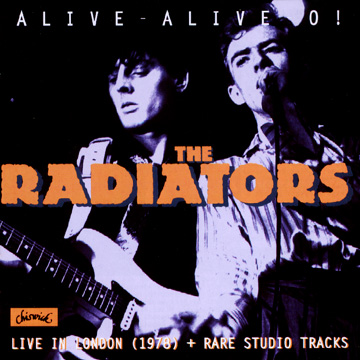
The Radiators (from Space) – The best band you’ve never heard of.

January 27, 2011

“Then the Radiators From Space came out, Television Screen, which was a great single, that was a real inspiration to us” – Bono, U2

Shite’n’Onions very f**kin proudly announces the North American Release of “Trouble Pilgrim”, by seminal Dublin punk band THE RADIATORS FROM SPACE.


The Radiators from Space – The best band you’ve never heard of.Some of you out there in readerland will be very familiar with The Radiators from Space, some of you might know the name and most of you will know squat. I would argue that the Radiators were the most important band in the development of the sound of modern Irish rock – sure there were great Irish rocks bands before The Radiators formation in 1976 – Them, Thin Lizzy, Taste and Horslips and I’m a big fan of all of them (including Them!) and each of them was uniquely influential and laid not only the foundations but also the walls of the house of Irish rock. It was The Radiators who I would argue that all the great and the should of been great Irish bands of the 80s and onward can trace their sound and attitude to – The Undertones, That Petrol Emotion, SLF, Cactus World News, Therapy?, A House, The Fatima Mansions, Blue in Heaven, Sinead O’Connor, The Pogues, The Virgin Prunes, My Bloody Valentine and of course those muckers from Ballymun and Malahide – U2 (and Bono even admits it).

The following feature was written a few years back my friend and Horslips fanatic Lora Templeton and originally posted on the excellent irishrockers.com. My thanks to Lora and Aidan Curran of irishrockers.com for allowing me to reprint.

The Radiators From Space

June 16, 2004 was the centennial of Dublin’s most celebrated literary almanac entry. It would take a bold soul to launch any public venture not in line with the Tourist Board’s agenda for the day. But there were five bold souls – Philip Chevron, Pete Holidai, Steve Rapid, Cait O’Riordan and Johnny Bonnie – who did exactly that, when the Radiators (from Space) hit the stage again after a 24-year absence and re-emerged on the Dublin music scene as the Radiators (Plan 9).

And for the Radiators (Plan 9), this high-energy Village gig was the opening of a new and ongoing chapter in the history of one of Ireland’s most influential bands.

The Radiators (from Space) grew out of a succession of early seventies garage bands formed by singer Steve Rapid and guitarist Pete Holidai, notably Bent Fairy and the Punks, and in 1975, Greta Garbage and the Trashcans. The Philip Chevron Band also made their debut in the summer of 1975 at Blackrock Park, Co Dublin. Chevron established contact with Holidai at the end of the year and they begin rehearsing as a new band in the spring of the following year.

With the advent of Chevron (guitar), and then Jimmy Crashe (drums) and Mark Megaray (bass), a truly consistent group emerged as a threat to the moribund Irish music scene and quickly began making history. Band names tried and discarded throughout 1976 included Rockettes, The Hell Razors, Rough Trade, and finally the Radiators (from Space).

In September 1976, as Rough Trade, they recorded a demo for CBS man Jackie Hayden and Horslips drummer Eamon Carr, who had recently launched independent record label, Midnite. Shortly after the session, there was another name change, and the band became officially the Radiators (from Space). In November, Carr played the tape to Roger Armstrong and Ted Carroll at Chiswick Records in London and the band signed a contract with Chiswick. That same month the Radiators made their ‘live’ debut as support to pub-rockers Eddie and the Hot Rods from Essex, England.

In early 1977, the Radiators recorded their debut single ‘Television Screen’ b/w ‘Love Detective’ with producer Roger Armstrong. In Ireland, it was licensed by Midnite to CBS Records and became the first Top 20 punk single anywhere in the world.

‘Both Television Screen and Love Detective outdistance most of the competition. The drumming is a powerful slice of rock’n’roll, the bass is neat and modest and the guitars don’t get carried away in their distorted frenzy. May best of all, the engineering concentrates on the higher frequencies, giving the songs real bite.’ (Charley Waters: Rolling Stone, October 6)

If the entire audience walked out of the Radiators gig at Asgard House, Howth, Co Dublin in January 1978, a sell-out show at legendary Moran’s Hotel, Dublin in March demonstrated how fast the band was rising in the music scene. In June, they performed alongside The Undertones, Revolver, The Gamblers and The Vipers at the University College, Dublin Punk Festival, a show marred by tragic violence when a member of the audience was stabbed and killed. In August, they played at Dalymount Park, Dublin, sharing the bill with Thin Lizzy, Graham Parker and the Rumour, The Boomtown Rats, Fairport Convention, Stepaside, and Stagalee. It was Steve Rapid’s last gig with the Radiators (from Space), although he remained a guiding light over the years that followed.

Singles released in September 1977 included ‘Enemies’ b/w ‘Psychotic Reaction,’ and ‘Sunday World’ b/w ‘Teenager in Love.’

‘No wall-to-wall sneers here, and after all living on the other side of the Irish Sea would justify them a lot more than those who insist on adopting such a stance just to be chic. A hit, I hope.’ (Steve Clark, NME, October 8 )

Following close behind the summer of singles, their first album TV Tube Heart demonstrated that beyond the fast-and-furious punk sound lay a couple of major songwriting talents in Philip Chevron and Pete Holidai. Then, an offer from Phil Lynott landed the band a support spot on Thin Lizzy’s 1977 UK tour, and with this, they left Dublin.

‘That what makes TV Tube Heart stand head and shoulders above so much of what’s currently going down. There’s hardly a song on the album that doesn’t have the kind of claw that sticks in the brain and just won’t go away… a great debut. It’s an album that puts the final stamp on what’s been an astoundingly good year for Irish rock.’ (Niall Stokes/Hot Press October 29)

Within four months of their arrival in London, the Radiators (no longer ‘from Space’) began work on a new album in Soho with producer Tony Visconti. The resulting record Ghostown, released in 1979, remains a unique outpouring of love, frustration, anger and heartbreak. Chevron and Holidai delivered songs that offered visions of Dublin and Ireland trapped in a childhood jam-jar and set free again in exile. The sheer scale of the material could be seen when ‘Million Dollar Hero’ became the great lost hit single, the late Agnes Bernelle performed ‘Kitty Ricketts’ in her West End show and Christy Moore (and later Moving Hearts) covered ‘Faithful Departed,’ adopting it as the perfect song with which to launch his own vision of modern Irish music.

Singles released in 1978 bridged the two albums, starting in April with ‘Million Dollar Hero’ from Ghostown b/w Blitzin’ At the Ritz’ Live, a TV Tube Heart composition. In July, another glimpse of Ghostown with ‘Walking Home Alone Again’ b/w the ‘The Hucklebuck’/’Try and Stop Me’ was scheduled, but cancelled. A remix of ‘Million Dollar Hero’ appeared in September.

‘The single of this summer… a new epoch in the Radiators story… This should be a complete and utter chart smash. For me the summer of ’78 will always be epitomized by ‘Million Dollar Hero.” (Hot Press) ‘If there’s justice, it’ll chart’ (Record Mirror)

In October 1978, the Radiators, with supporting band Stiff Little Fingers, performed to an unreceptive audience at the Electric Ballroom in London. It would be their last concert in the UK and they returned to Ireland in December.

‘If there is a lesson to be learned from last Tuesday’s performance at the Electric, it is simply that the band’s music has progressed so dramatically that they must now find a new audience to appreciate it.’ (Harry Doherty/Melody Maker Nov 11)

Despite gigs in Dublin, including a one-off conglomerate of the Radiators and Horslips playing as ‘The Meanies,’ Mark Megaray and Billy Morley left the Radiators in early 1979. The summer saw the release of two more singles from the Ghostown album. ‘Let’s Talk About the Weather’ b/w ‘The Hucklebuck’ and ‘Try and Stop Me’ in June, and ‘Kitty Ricketts’ b/w ‘Ballad of the Faithful Departed.’

Ghostown was not released until August 1979 and it bombed commercially. But reviews attested to what would become its enduring significance.

‘It’s a monumental achievement in rock, possibly the most significant Irish rock album ever… its greatness lies partly in the fact that it’s not purely dismissive, that it explores aspects of what it’s challenging and in doing so discovers a language which is all the more moving for the associations it evokes.’ (Niall Stokes/Hot Press August 10) ‘An epochal statement of Irish rock, an utterly indispensable artifact in even the most selective collection of Irish albums… Ghostown is – to utilize that much debased word – a classic. It positively redefines the artist terms of Irish rock… the Radiators rise to the top of the class of ’76.’ (Bill Graham/Hot Press August 10) ‘A magnificent record… full of inspired and memorable urban images’ (Mark J. Prendergast/’Irish Rock’ O’Brien Press 1987)

Four on the Floor, an EP featuring ‘Television Screen,’ ‘Psychotic Reaction,’ ‘Enemies’ and ‘Teenager in Love’ was released in February, 1980. Other singles that year included ‘Stranger Than Fiction,’ produced by Hans Zimmer, b/w ‘Prison Bars’ and ‘Who Are The Strangers’ in July on the Chiswhick label and again ‘Stranger Than Fiction’ b/w ‘Paddy ‘Guitar’ Paddy’ and ‘Who Are the Strangers’ on Mulligan, the Radiators’ Irish label. In September, various mixes of ‘The Dancing Years’ were released and the Radiators made three major Irish TV appearances, including The Late, Late Show. An autumn and winter of gigs throughout Ireland followed.

‘Before a packed audience in the Project, they played a fine set that made a mockery of their fruitless search for gold across the water.’ (Joe Breen/Irish Times Nov 4)

In March 1981, ‘Song of the Faithful Departed’ b/w ‘They’re Looting the Town’ was released. That same month the Radiators cancelled their proposed Irish tour and ceased work on the demos for a third album (to be called Absent Without Leaving). The band formally broke up.

But it was still only 1981 after all, and it would take a few more years before the world was ready for a band expressing a new generation’s view of Irishness. By then, Philip Chevron was himself a member of that band,The Pogues. They went on to tour the world, sell millions of records, craft modern classics such as ‘The Old Main Drag,’ ‘Thousands are Sailing’ and ‘Fairytale of New York,’ and inspire wave after international wave of bands eager to find out what happens when you smash the genres of traditional folk and do-it-yourself rock-n-roll together.

Meanwhile back in Dublin Steve Rapid, the Radiators member who chose to stay behind in 1977 and concentrate on both his graphic design business and building a local scene, crossed paths with Dublin band The Hype, Rapid demonstrated that he had not lost his aptitude for striking band names and The Hype soon became known as U2. Steve (aka Steve Averill) also designed the sleeve of the band’s U23 EP and continues to be involved in their design process to the present day.

Under Clery’s Clock debuted at a one-off gig at Hawkins, Dublin in 1985, when the Radiators reformed for one night only at AID TO FIGHT AIDS, a Dublin charity event. In 1988, the band recorded this song and Plura Belle, another new composition, with Chevron and Holodai producing. Released as a single in January 1989, Under Clery’s Clock was named NME’s Single of the Week in February. That same month, both songs appeared on the digitally mastered CD release of Ghostown.

‘This really and truly was the one that got away, one of the most important and enduring LPs in my life… This is outrageously masterful stuff.’ (Carol Clark, Melody Maker Mar 11)

‘The transcendence of its art means that it will endure beyond the wildest aspirations of albums which have sold 100,000 times more. No contest.’ (Panel of 95 Irish music business/media people vote the album #16 of all time/Hot Press Yearbook 1989)

And the music endures, even thrives, beyond its own time. In February 2005,

Ghostown appeared in the Hot Press People’s Choice readers’ poll of the top 100 greatest Irish albums of all time. In April, Brian Boyd of the Irish Times reviewed the Ghostown reissue and reminded his readers that ‘Musically, the album was audacious for its time; lyrically, it’s never been better. Ghostown represents the first time in Irish cultural life that a rock music 33rpm could sit pretty alongside the country’s literary and dramatic outputàquite simply: a monumental artistic achievement.’

The Radiators’ Bloomsday gig of 2004 was not a one-off. The new band, with former Pogues bassist Cait O’Riordan and Those Handsome Devils drummer Johnny Bonnie joining Chevron, Holodai and Rapid, rocked the Oxegen Festival in Ireland soon after. On June 24 2005, they were special guests on U2’s Dublin homecoming show at Croke Park. An EP The Summer Season was released in the same month. Tracks include ‘Hinterland’ a new and stunningly current Philip Chevron song, ‘The Girl with the Gun,’ and ‘live in the studio’ versions of ‘Sunday World’ and ‘Electric Shares.’ An active official website and discussion forum illustrates that the Radiators now have international and second-generation fans as well as the original punk kids who first rocked out to ‘Television Screen’ at Moran’s Hotel, Dublin.

Reissues of earlier albums TV Tube Heart and Ghostown in 2004, as well as news of recording of a much anticipated third album in 2005 show that the band continues to live up to the Sounds magazine pronouncement of ’77 that ‘The Radiators are [still] playing FIVE-STAR ROCK’N’ROLL PETROL.’

by Lora Lee Templeton

The Tossers: Shamrocks, Brains and Guts

July 2001

“There weren’t any bands out there playing real music, emotional music that you could dance to, or laugh to or cry to…..” -Shane MacGowan

Lester Bangs once said rock-n-roll would die an empty death once it’s turned into a corporation fit for mass consumption. This it most certainly has. Examples abound, nowhere more sickeningly than in the “free thinking” world of punk rock: Has it lost its edge? Does its inability to seem exciting and fresh spell it’s own demise, even though it is more popular than ever? Do the hordes of Bad Religion and Blink 182 clones’ successes translate into punk’s ultimate meaninglessness? Mass produced bands and massed produced crap?
There is currently a movement within the punk rock genre that, to some critics and fans, is facing a similarly detached future. The fusion of Celtic folk with ’77 Style punk rock really isn’t a new concept. Shane MacGowan and Spider Stacy were toying with the idea as early as 1980. Nearly everyone has heard this experiment’s results: the almighty Pogues. One of the best bands of all-time, to be sure. Certainly, Stuart Adamson of the popular ’80’s band Big Country used Celtic sounds and attitudes to that group’s advantage. Adamson’s early punk band, the long defunct Skids, were a definite precursor to this genre. Listen to “Into the Valley” and tell me Stuart’s guitar doesn’t sound like bagpipes on purpose. Then there are the groups that just never made it big, like The Men They Couldn’t Hang. So, no, the genre isn’t new, but to a whole new generation, it seems relevant and exciting. My question is – is it? Or is it, too, being prepackaged and sold to a new generation for them to “fit for mass consumption” and, subsequently ruin, as Bangs theorized? Is this genre overstaurated?

It wouldn’t take long before one could list quite a few current punk/streetrock bands whose sounds are described as ‘having an Irish folk flavor” or sound “kinda Pogues-y.” Many have actually covered old Irish folk songs on vinyl. Actually, it is almost the norm nowadays. It’s almost refreshing to read a review where the reviewer doesn’t use the aforementioned terms to describe a new Oi! or streetrock album. Zines like Hit List and Flipside complain about the ‘overuse’ of Celtic sounds in much of today’s punk. Are they right? Is this genre becoming watered down and boring?

Lest you think me cynical, I do believe there are bands out there today and one local band in particular, that have proven to me that the genre is still relevant. For all the Irish folk/punk/Oi! bands that are becoming bigger and more popular, and for all the ones who form or incorporate Celtic sounds simply because it is the “in” thing to do, for all the ones whom some critics accuse of falling prey to the banshee that cries “sell-out,” hope awaits. It exists in the form of the bands who have been around, those who have paid their dues, those who have remained true and understand that there is more at stake than just money. Ladies and gentlemen, I give you Chicago’s favorite sons, The Tossers.

Only the End of the Beginning
“And we just thought: Fuck it. What we’re doing is good, no matter how badly we’re doing it. It’s good because it’s based on good music.” -Shane MacGowan

I’m not saying I was there at The Tossers first show. I have, however, been following them since their first demo “Pint of No Return” and have been to countless shows over the years. I’ve seen them on their own in dinky, fucking dank bars and I’ve seen them open for legends like Stiff Little Fingers and the aforementioned Shane MacGowan. They have paid their dues, took their lumps and logged their miles without the level of success that some ‘newer’ bands have tasted – and still, here they are.

“Damn near ten years” Tony Duggins, singer and mandolin player, says, when I ask how long the Tossers have been at it. He says this with a look that seems to be a cross between pride, wistfullness and maybe a bit of weariness. Today, the Tossers line-up is as follows: T. Duggins handles the vocals, guitar and mandolin, his brother Aaron Duggins is on tin whistle, Dan Shaw is on bass, Clay Hansen is on banjo and Bones handles the skins.

Back in 1992, when the Tossers started, there weren’t as many bands doing the Celtic punk thing, as many are now. Tossers bassist Dan Shaw gives an appropriately MacGowan-esqe ‘vague’ description of the Tossers humble beginnings: “Everybody but Clay grew up together. It just happened, I don’t really remember much of the details but I guess it was mostly luck.” Luck, guts and a bastard talent. The early gigs were described as “Pretty much the same as now – consuming intense amounts of alcohol, playing all night and not getting paid”. Eventually, the band began to get its name out. Clay Hansen joined in 1997 after the violinist (Jason Lovell) quit and as Shaw recalls, Hansen ” had never played a banjo before but didn’t tell us that. We gave him a copy of the disk and he borrowed a banjo and 2 weeks later he showed up at his first show. That was almost 5 years ago.”

The Tossers crew hails from Chicago. Chicago, as those from there know, wears its Irish history like a badge of honor. While their loyalty to the town is undying (“Chicago is the best fuckin’ rock-n-roll town in the states” Clay said) I wondered how they got their start with punky Irish folk. When asked if it was the South Side influence or the passing down from family member to family member that made the lads want to play the Irish stuff, Hansen replied. “Yes, it was handed down but I think we got sucked in cause the songs were mostly about drinkin’ and fuckin.’ We enjoy drinking and fuckin’ so it felt good to play those songs. We all came from different bands who were trying to be rock stars so we didn’t really feel the need to play anything anyone would like. We just got to play what we liked.” The Tossers also posses an unquestioned work ethic. “We played anywhere, anytime, for anybody, with anybody” is how Clay summed it up. How, then, do they feel about the rising popularity of the Irish punk/folk thing? About bands who are quite popular like the Dropkick Murphys or Flogging Molly? (Both of whom I am a great fan of) Tony said he loved both bands and Hansen replied “We don’t think about it. The Dropkicks rock and Flogging Molly are nice guys. We don’t give a fuck about fads. If we did we would have started a boyband.” Well said, mate.

Rebel Songs and Blow Jobs
“When I was really little, I was brought up by the people in Tipperary who knew millions of songs. It was real gut level stuff, music that’s been handed down from generation to generation” – Shane MacGowan

I was in Champaign, Illinois on June 12th at a local Irish bar called Mike and Mollys and caught up with the Tossers there. After the Tossers second of two sets ended, I stepped back and thought about what I had just seen and was, quite simply, amazed. And I began to think about the difference between the Tossers and other popular Celtic Punk/folk bands of the day and wondered why the hell I think the Tossers are so much better at what they do than most. The answer seemed to me to lie in what MacGowan termed the “gut level stuff.”

The Tossers two sets on a balmy 90 degree night included no less than TWENTY old Irish folkie standbys and as many of their own originals. The sets also included the American folk classic “The Long Black Veil” and the sea shanty “South Australia.” All of it immediate, ‘gut level stuff’, nothing forced or phony there. While certain bands may choose the most obvious of Irish songs to cover, Duggins and company dug deep. The standards were there, of course: “The Wild Rover”, “The Irish Rover” “I’ll Tell Me Ma” “Seven Drunken Nights” etc, etc, but also were the lesser known gems (at least among the Champaign crowd) like: “Monto” “Muirsheen Durkin’” “Home Boys Home” and “Poor Old Dicey Riley.” Hell, they took two requests from me: “The Fields of Athenry” (not really a request, per se as their own “A Night On Earth” segues into it anyway) and one of my personal favorites “Holy Ground.” (By the way, the Skels of New Jersey do a blistering version on CD, as well as a little bootleg with Pat Kennedy of the late Molly Maguires fame on piano) T. Duggins started and re-started “Holy Ground” until he had it how like he liked it and blazed through it. This, to me, is guts, ladies and gentlemen. Fucking do it until it’s done right. Take requests and if you fuck up, who cares? Give it another damn shot. Gustiest of all may well have been when T. Duggins sang alone, without any accompaniment from the band, and he did this several times that night. The last being “The Parting Glass.” Fucking brilliant. This is band that knows its material and respects it’s roots.

The band took requests all night and when I shouted, “play the Clash,” Aaron Duggins replied “The Clash were pussies” but then I heard the familiar strains of “London Calling” being played on mandolin. Tony Duggins strikes again- that cheeky bastard. Their own songs included the by now Tossers classics: “Buckets of Beer” “When You Get Here” “Aye Sir” and newer favorites like “The Crutch” with it’s “So Give Me Two Pints of Stout – Oi!” chanted chorus well intact and “Mad Riot” tearing things up as well. All in all, they must’ve played damn near 40 songs.

Afterwards, when I got a chance to talk to Tony, he was soft spoken and laid back (or was that drunk?) I told him I wished they had played a favorite of mine from the first CD “We’ll Never Be Sober Again” a slow-burning song called “Alone” where Duggins speaks of rebels wives who ‘wear black’ for their lost husbands. It’s a haunting piece, the mood very somber, and the lyrics of “Mrs. Ryan wears black, Mrs. O’Shea wears black, Mrs. Kelly wears black” drive the point home. “That’s a good rebel song, that one” Tony told me. Which brings me to a point. I remembered the Pogues and Shane in particular had gotten accosted several times for their ‘rebel leanings’ and Black 47 were dubbed the ‘musical wing of the IRA” by the British press. I wondered if the Tossers had ever encountered any physical violence from this or any other scenario. “Yes,” Clay said. “I had a girl try to stab me in the eye with her keys once while her boyfriend tried to steal my amp. Actually, there have been a lot of times we have gotten into scuffles but we are pretty non-violent so we usually talk our way out of fightin.’ Sometimes it can’t be helped. We used to fight a lot more when we were younger and found out it wasn’t that much fun getting the shit kicked out of you.” Hansen also revealed a bit more about these confrontations. “Most fights start over one of us fucking some dudes girlfriend or wife. I had a girl in a club suck my cock in the balcony while her husband was down stairs one night. He came looking for her wondering why she was gone so long and he didn’t get the joke. All the boys were downstairs boozin’ and didn’t know I was getting an ass-kickin.’” Are you sure these guys aren’t rock stars? That sounds pretty Keith Richard-esqe to me. Should they be re-christened Motley Tossers?

All in all, it was a great show and the Tossers were a great bunch of guys. As they were loading up, they were wondering if they indeed had a show in the next town they were scheduled in. Who knows, but they were going to get drunk anyway. Road warriors, each and every one of them. And a damn fine band. A damn REAL band who know their roots and play for the sake of playing.

Buy A Tossers CD
So it goes – The Tossers were one of the first in the current ‘revival,’ as well as being one of the best and, if there’s any justice, will reap the rewards in the near future. It’s funny, having talked with T. Duggins, it is apparent that he is down to earth and is in no way buying into the hype-ridden world of punk rock. And sometimes this isn’t any easy thing to do. Sometimes even bands with the best intentions and truest to their roots, become bigger, and can fall prey to mid-level success. There are always those among the punk rock locals who sanctimoniously kiss ass and get backstage and ‘party’ with the bands, due to the free tattoos they give, the beer they supply or something of that nature. Sometimes some of the real fans seem to get overlooked. Sometimes, with new popularity, and new fans, the new crowd take the band over as their own. Not so with the Tossers. I had never talked with Tony before, but once I told him my purpose, to get an interview/article for a zine promoting the Irish Punk/Folk scene, he didn’t think about it for a second. “Sure, definitely”, he said. And I could tell it wouldn’t be uncomfortable and he was actually going to listen to my questions, rather than cut me off to tell someone to “go get him a t-shirt” so he could give it to some skirt in the crowd. Nah, he was content to discuss issues, his music and music in general. Hmmmm…. Maybe there’s hope for this genre after all……Tony Duggins and the Tossers are for real, folks…

The Tossers have two full-length CD’s available: “We’ll Never Be Sober Again” and “Long Dim Road”. A complete discography can be found at Thickrecords.com. Purchases can be made there as well. Future releases include an upcoming 6 song EP with 2 originals, 2 traditional and 2 covers: Jerry Lee Lewis “Rockin’ My Life Away” and Bob Dylan’s “7 Curses.”

Clay said it turned out good. Then again, he’s the bastard that got the blowjob in the balcony. Rock star, indeed.
http://www.thickrecords.com/bands/tossers.html

By Sean Holland

The MAhones -Tribute

You’ll probably be aware that The Mahones are putting out a tribute to themselves CD soon with some really great bands involved – a full preview is up on http://www.myspace.com/mahonestributealbum . I was honored to be asked to write the sleeve notes by head Mahone, Finny, so in my best Lester Bangs, I give you The Mahones…….

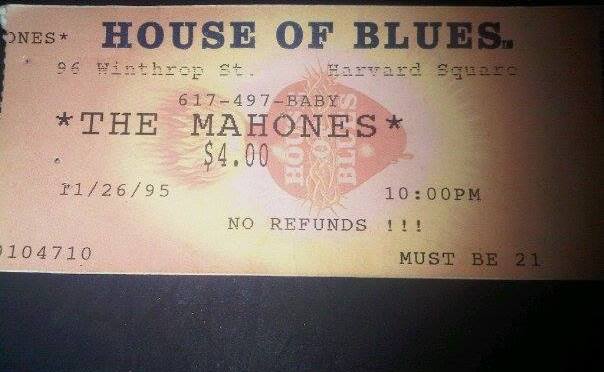
I first came across The Mahones sometime during late summer 1995 – I had gone to the 1st (and only) Cambridge, Celtic festival run by the then and now excellent The Druid pub. I was interested in checking out The Mahones as I heard they were a bit like The Pogues – well were they that and more! The guy with the porkpie hat and the mass of blond hair underneath let out a banshee wail that shook me to my foundations and the band, a musical equivalent of a faction fight knocked me for 10. Yeah they were like The Pogues but instead of just having a punk attitude The Mahones were punk – Celtic Punk.

I caught The Mahones a 2nd time that night at a party in the old Cambridge House of Blues for Dan Aykroyd’s Celtic Pride movie (awful movie, great title track from The Mahones) that me and me mates somehow crashed (Trev, Paddy where are you?). After the gig, The Mahones thanked me and the lads for jumping around and generally acting the goat during the set unlike the rest of the Hollywood type posers who made up the audience. Finny (the guy with the hat, the hair and the wail) then handed me a piece of paper – “it’s our web site check it out when you get a chance”, he said – me, I was highly impressed with this printout and said I would. Of course, I don’t think I had ever been on the internet at that point in time (it was ’95 kids, The Dropkick Murphys were still working on construction sites and saving pennies for their 1st 7″ a year later, and Dave King was still doing the hair metal super group thingy).

I lost touch with The Mahones after that as they went through issues with their major record label and the tragic death of bass player Joe Chithalen.

In 2001, now internet savvy and having just started Shite’n’Onions, I tracked down The Mahones and bravely sent a email to their new indie label looking for a copy of their new release – Here Comes Lucky – to review. Two weeks later very pleased with myself that the label had actually sent me the CD, I popped it in the CD player and wow, Finny was still screaming like a banshee and The Mahones were even better and louder then I remembered.

By the early to mid 2000’s Celtic Punk had become a whole genre, a genre that The Mahones founded.

Unfortunately for The Mahones, while Flogging Molly and Dropkick Murphys were able to build huge followings through hard touring, The Mahones were forced to look on as visa problem keep them out of the US for 5 years. Now, with visa problems out of the way, and with another great album under their belt – Take No Prisoners – and another – The Black Irish – on its way, combined with almost constant touring, The Mahones are poised to claim their place on the top of the Celtic Punk pile. All hail The Mahones!

Potato-eating, Whiskey-drinking, Bog-trotting, CELTIC PUNK ROCK since 2001